August 20, 2017
Pastor Mark Bradshaw
“It is not fair to take from the children’s food and throw it to the dogs.”
I think we can safely assume that our Lord is tired.
John had lost his head, and now Jesus has lost his cool.
And who can blame him, everytime he tries to get away for some quiet someone sees him, and before long there is a crowd pressing in.
The people are desperate and in need and Jesus is full of compassion and God has made it evident that through Jesus healing flows. Then one day Jesus decides he needs to get up and go, head to the coast and outside of the borders of Israel where he can enjoy that sweet Mediterranean breeze, put his feet in the sand and watch the sunset. Perhaps Jesus was feeling overwhelmed, weary under the weight of it all. The more people he healed the more aware he became of how many were still in need. For every lost sheep that our Good Shepherd carried back into the fold there seemed to be two new wolves, ready to devour. And so Jesus, feeling hemmed in, goes on a retreat. Jesus decides to practice a little self care, hoping for a certain level of anonymity. Yet, and notice this, whereas Jesus was seeking to find refreshment and renewal outside of his borders geographically, God sends someone to Jesus who is outside of his ethnic and social borders in order to get him back on track. To put it bluntly, God sends his Son a woman to set him straight… to expand his borders… to increase his imagination… to broaden his perspective.
In the television industry, it really has become a type of art to recap the previous episodes of a season, often in only 1-2 minutes, as a means of bringing the viewer up to speed. The current episode plays a specific role within the overall story and the reason for the opening recap is to refresh the audience’s memory as to how it relates to a few specific strands within the overall story line.
Now, at first glance it is surprising that this morning’s Gospel made it past the final edits. Any of you wish this was a deleted scene, clearly out of character for Jesus? And yet, as we may be standing here scratching our heads the observant disciple will discover that there is a trail of breadcrumbs that has been left for us to follow.
So here it is, our opening recap:
Jesus appointed how many disciples?
The women with the bleeding infirmary, who reached out and touched the hems of Jesus’ robe and was healed – how many years had she been sick?
That happened while Jesus was on his way to heal a young girl who was how many years old?
Okay, are you picking up what Matthew is shoveling? So, why 12?
- 12 tribes of Israel.
So, in our Gospel this morning we heard Jesus’ words, “I was sent only to the lost sheep of the house of Israel.”
And right after Jesus learns of John’s death he goes away to try and be alone and the crowds follow, he teaches them and then does not want to send them away hungry. With five loaves and two fishes how many people are fed? And here is the bonus question – how many basketfuls are left over?
Are we getting the point yet with 12?
Now, perhaps it is not too much of a stretch to think of the 12 basketfuls of broken pieces as the crumbs that were leftover, one for each tribe. I am picking up on a theme of abundance.
Okay, one last theme in our episode intro, this would have been our Gospel reading from last week – and I don’t know about you but I was more than happy to have Abbey veer off from the lectionary and give us her message! Yet, in the story of Jesus walking on water, summoning Peter to come and walk with him, I would have the cameras zoom in on Peter sinking as Jesus extends a hand and says, my paraphrase, “Man, you have such little faith!”
Okay, who is still with me? Did I lose anyone?
Jesus sets off for the coast, outside of Israel, he is tired and I imagine the Pharisees have really gotten under his skin, and then she shows up. A Canaanite, that godless group of people who inhabited the land before Israel came in and conquered it. A Canaanite woman, nonetheless, and she is desperate. Her daughter is tormented by a demon and she begins crying out for Jesus’ attention. “Have mercy on me, Lord, Son of David; my daughter is tormented by a demon.” But he did not answer her at all. Jesus just ignores her. And his disciples came and urged him, saying, “Send her away, for she keeps shouting after us.” Lord, just send her away.
Last week Abbey shared with us a profound poem by the Rev. Dr. Pauli Murray. Much of what I am about to share I gleaned from an article in the New Yorker written in April of this year. Pauli Murray, born in 1910, was ahead of her time. She sat in the wrong seat on the bus, participated in nonviolent demonstrations, and advocated for the equal treatment of all persons several decades before the civil rights movement. She began her life as an orphan and culminated it by becoming the first African American woman to be ordained an Episcopal priest. In high school, she was the only black among 4,000 students. She applied to the University of North Carolina and was denied admission because she had the wrong color of skin. Later she was denied admission to Harvard Law because she had the wrong gender.
While studying at Howard University Pauli was no longer excluded for the color of her skin but rather due to the fact that she had the unfortunate condition of being born a woman. She was the only woman among faculty and students and on the first day of class her professor was all too eager to humiliate her by remarking that he could think of no reason why a woman would desire to attend Law school. Thus, not only did Pauli resolve to become the top student in her class, which she was, but she also grew in her determination to end what she termed Jane Crow.
While at Howard a class discussion arose on how to best end Jim Crow. Plessy vs. Ferguson, the case that upheld segregation, used the phrase “separate but equal.” The class conversation was focused on the term “equal” and the men scoffed when Pauli dared to question the term “separate.” She proceeded to bet her professor $10 that within 25 years Plessy vs. Ferguson would be overturned, Pauli was right. But her law-school professor, Spottswood Robinson, would come to owe Pauli much more than $10. Pauli would go on to argue in her final law school paper that segregation violated the Thirteenth and Fourteenth Amendment of the US Constitution. Years later Spottswood Robinson remembered Pauli’s paper and presented it to Thurgood Marshall and the remainder of his colleagues, the same group who successfully argued Brown vs. the Board of Education.
Now, I would like to propose that Spottswood Robinson and Jesus of Nazareth both share something revolutionary in common. It is not that they both devoted themselves to the cause of justice, nor that they both were committed to advocating for those who society had discounted. Rather, what was revolutionary about these men, and worthy of emulation, is that they both were willing to eat crow. They both were willing to not only admit, but seemingly revel in the fact that a woman had set them straight.
Stepping back into our Gospel, up until this point we have grown accustomed to Jesus being the one who stumps the religious leaders, but in our Gospel this morning it this unnamed Canaanite woman who stumps Jesus. “It is not fair to take from the children’s food and throw it to the dogs.” “Yes Lord, but even the dogs eat the crumbs that fall from the Master’s table.” She does not play the victim, she does not need to make Jesus into the villain. Rather, she takes what Jesus gives her and uses it to stump him. She gets creative. – Jesus, isn’t it God’s table, and isn’t God a God of abundance? Jesus, your reference point is this group of children and you are wondering if there is going to be enough for them. My reference point is the merciful God who created us all, and all I need is a crumb from God’s table and my daughter will be made well. Jesus, isn’t your God bigger than that? And, move over Peter, Jesus looks at this woman and says, “Wow, how great is your faith.”
Back in that classroom at Howard University, as those young black men were debating what it means to be treated as equals, the one thing seemingly all men in power held in common, black and white, was that women were not equals. And if it has become hauntingly clear in the recent weeks that we have so much more to overcome for racial equality, let us equally remember how much more we must overcome for gender equality.
And just how many people were fed? Was it 5,000? Matthew makes a point of saying “5,000 besides women and children.” So, who was it that decided the women and the children did not count? If 15-20,000 children of God ate and were filled on that afternoon, who decided it was only the men who count? It wasn’t God.
God counts those the world counts out.
God counts those who men discount.
We can count on that.
You are hereby formally, officially and cordially invited to please join us during this our centennial year and beyond (in-person, online, offline and/or Pastoral Care), on our continuing journey of Love, Saint Barnabas Style 🖤
Wyoming Episcopalians look to welcome Afghans
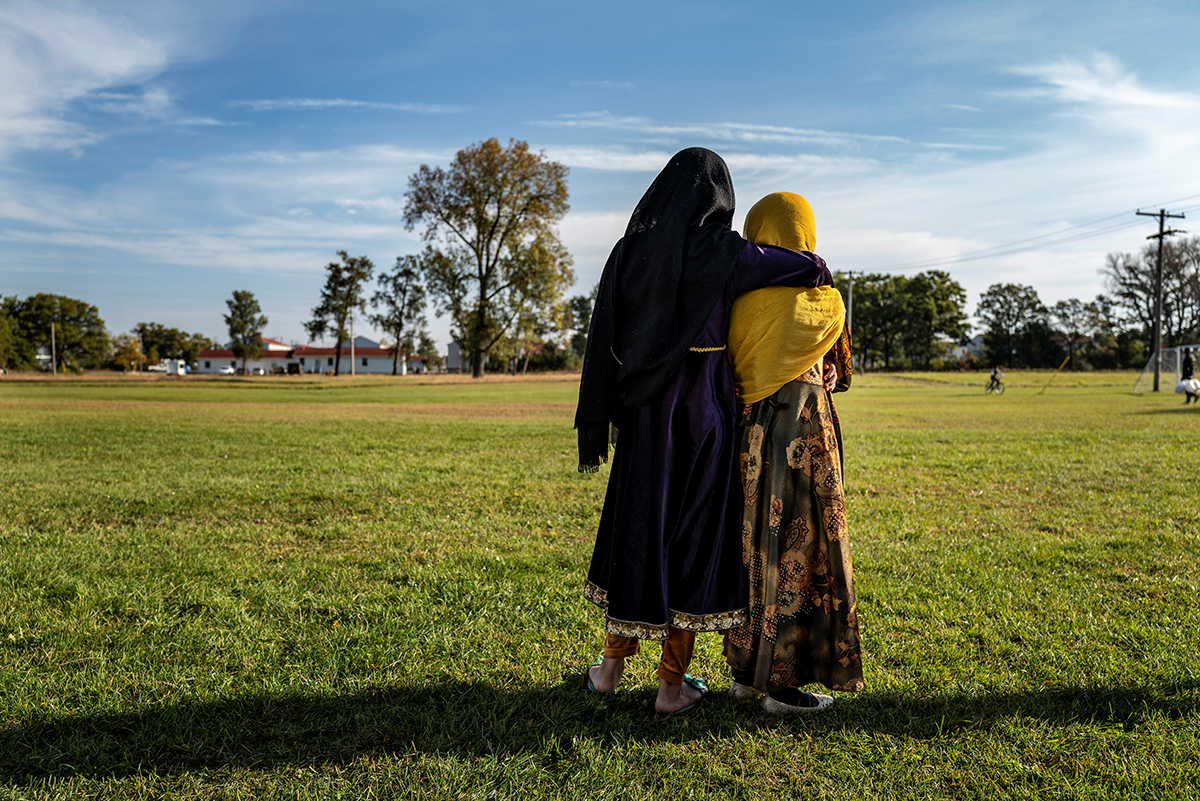

Afghan refugee girls watch a soccer match near where they are staying in the Village at the U.S. Army base in Fort McCoy, Wisconsin, on Sept. 30, 2021. Photo: Barbara Davidson/REUTERS
[Episcopal News Service] As churches across the United States consider ways to welcome Afghan families who fled the Taliban in their home country, Episcopalians in Wyoming are making headlines for countering the state’s reputation as the only one in the nation never to have a formal refugee resettlement program.
The vestry at St. Mark’s Episcopal Church in Casper voted unanimously on Sept. 20 to begin researching the process for sponsoring an Afghan family. The church formed a committee to work with Episcopal Migration Ministries on a plan to provide for such needs as housing and job placements, as well as to offer fellowship and other support to these potential new neighbors.
“Most Afghan families want to go where there’s an Afghan community. There’s no community here,” said the Rev. Jim Shumard, rector at St. Mark’s, but he told Episcopal News Service that he and his congregation hope to change that. “We pray other local churches will sponsor other families so that we can build community together.”
Last week, St. Mark’s efforts were profiled in a Washington Post article that highlighted residents’ past reluctance to welcome refugees to this strongly conservative and mostly white state. In 2020, 70% of Wyoming voted in favor of President Donald Trump, who made opposition to legal and illegal immigration a cornerstone of his campaigns and who, as president, reduced the number of refugees allowed into the United States to a historic low of 15,000.
On Friday, Oct. 8, President Joe Biden raised the refugee ceiling to 125,000 for the 2022 fiscal year.
All of these refugees will need to find places to live, and as they settle in new communities, many will receive help from one of the nine agencies that are part of the federal refugee resettlement program, including Episcopal Migration Ministries, or EMM.
“EMM continues to work through our network of 11 affiliates to provide services to arriving Afghans,” Kendall Martin, EMM’s senior communications manager, told ENS by email. “The greatest need continues to be housing.” Donations can be made online to EMM’s Neighbors Welcome: Afghan Allies Fund, and congregations and individuals interested in offering housing or volunteering can complete EMM’s online form.
“We are aware that there are Episcopal congregations and leaders in Wyoming who care about this issue and wish for Wyoming to be a welcoming state,” Martin added.
Wyoming Bishop Paul-Gordon Chandler would also like to see his state open its door to refugees.
“As the Episcopal Church in Wyoming, we desire to be a faith community that welcomes the stranger and embraces the ‘other,’ following the example of Abraham, who is not just our ancestor, but the ancestor of all Afghan refugees,” Chandler said in an email message to ENS. “As Wyoming doesn’t have a federally funded resettlement program, it will require extra creativity and commitment to make this happen. We are currently exploring together all that this will entail and look forward to what God may have in store as we journey down this road toward sacred hospitality.”
After the 20-year U.S. war in Afghanistan ended in August with the final withdrawal of American troops, an AP-NORC poll showed most Americans support welcoming Afghans who worked for the U.S. government and are open to welcoming others fleeing persecution from this country at the crossroads of Central and South Asia. About 50,000 Afghans were allowed into the U.S. under what is known as humanitarian parole. Some may be able to apply for special immigrant visas, while others will apply for asylum.
Wyoming State Rep. Landon Brown, a Republican, told NPR this week that he supports welcoming Afghans but expects some resistance. “It’s a very difficult conversation to have here in Wyoming, strictly because of our small population and the fear of what that influx of immigrants may look like to our small population,” Brown said.
Wyoming, with 580,000 residents, is the least populous state in the country. It is nearly 84% white, not including Hispanic residents, compared to 60% of the United States population, according to the U.S. census. Of all U.S. residents, 14% were born in another country; in Wyoming that number is 3.4%.
While several neighboring Western states have offered to receive Afghan families, a spokesman for Wyoming Gov. Mark Gordon said in August that he “has no interest” in doing the same. Gordon’s office told the Washington Post more recently that the governor was open to developing a process for faith groups to host evacuees.
Shumard said he has not received any negative response from parishioners or the local community to his congregation’s interest in sponsoring an Afghan family. The only “hate mail” he said he received was an email from an anti-Muslim critic from out of state who reacted to the Post article.
Shumard’s first experience with welcoming refugees dates back more than two decades to when he was serving at Grace Episcopal Church in Gainesville, Georgia. That congregation helped settle and support families from Bosnia. Shumard is confident that families from Afghanistan will feel just as welcomed by Wyoming residents. “I think there are enough voices that want it to happen, that it’s a great opportunity,” he said.
For Christians, that spirit of welcome is biblical, he said, citing Jesus’ command in Matthew 25 to feed the hungry, clothe the naked and welcome the stranger. “It’s not only what Jesus would do,” he added. “It’s also a way to honor the work that our soldiers did. … They said they couldn’t do their job without these [Afghan] interpreters and allies. So few of us fought in Afghanistan or worked in Afghanistan. I feel this is a way for us to do our part.”
The committee at St. Mark’s is working with members of a missionary community called The Table to recruit enough volunteers to establish a viable welcoming team. Some already have started looking into options for housing and jobs, if and when they are able to introduce an Afghan family to Casper, a city of about 58,000.
As the congregation takes the process one step at a time, “I’m just sort of trusting the Spirit is working in this,” Shumard said.
– David Paulsen is an editor and reporter for Episcopal News Service. He can be reached at dpaulsen@episcopalchurch.org.
Los Angeles area congregations form mutual support partnership
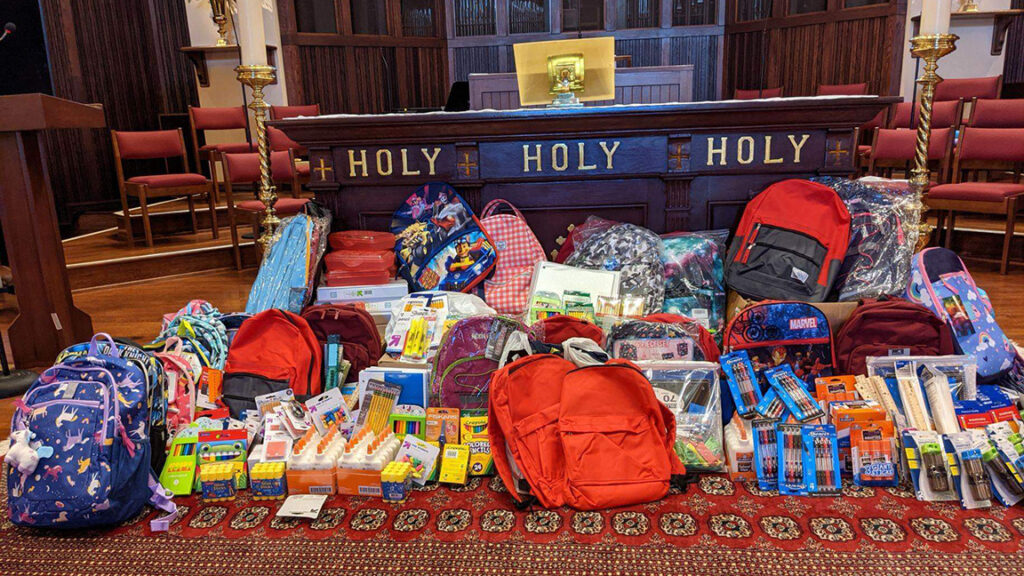
St. James’ Church in Newport Beach, California, collected school supplies for young members of its sister congregation, St. Michael’s in Anaheim, at the beginning of the 2021-22 school year. Courtesy photo
[Diocese of Los Angeles] As churches reimagine post-pandemic ministry, two Southern California congregations hope a budding relationship will blossom into a full-fledged cross-cultural exchange.
For the Rev. Juan Jimenez, vicar of St. Michael’s Church in Anaheim, a bond forged with St. James’ Church in Newport Beach at the height of COVID-19 centered around “a goal to create some personal relationships between people in both congregations that would allow us to understand each other better. In this society, we really need that, and we need that in the church,” he said.
“We are two very different congregations, but we’re all members of the Body of Christ – and yet we’re all so different.”
Pre-COVID, Jimenez, 76, had led four Sunday worship services – two in Spanish and two in English – for about 400 congregants. The English-language services were intended for second- and third-generation Latinos, he said.
The pandemic decimated the congregation. At least 14 members died and many more became ill while others – employed in the service industry and by Disneyland – lost their jobs when restaurants and entertainment venues closed. Challenges continue to mount for many, since the eviction moratorium for renters ended Sept. 30, he said.
The Rev. Juan Jiménez, pictured here at a “Called to the Wall” pilgrimage, is vicar of St. Michael’s Church in Anaheim. Photo: Janet Kawamoto
In Newport Beach, some 20 miles away but a world apart, about 9% of the population is Latino, compared to Anaheim’s 54%. Anaheim’s 2019 per-capita income was $28,465. About 24% of Anaheim residents are white, compared to 80% in Newport Beach, which boasted a 2019 per-capita income of $95,404.
“I was serving on the Program Group on Mission Congregations and heard St. Michael’s was struggling financially, yet was a thriving parish with an ASA of 400-plus,” said the Rev. Cindy Evans Voorhees, St. James’ vicar. “Then the weight of the pandemic hit about 80% of the congregation with cuts in the service industry where they worked. I felt St. James would respond to their circumstances, and they did. I proposed the sister congregation relationship to Fr. Juan, and then to my congregation, in the fall of 2020. All were in agreement – we were in this together.”
Los Angeles Bishop Suffragan Diane Jardine Bruce facilitated the partnership, which has since evolved into mutual moral support as well as financial and other assistance, Jimenez said.
“God was probably behind it,” he added. “Financially, they are helping with $1,000 a month; it’s a lifesaver. At the beginning of the school year they donated backpacks and school supplies for our kids. That was very helpful.”
Voorhees said what began as a desire to help St. Michael’s quickly progressed into a bond of mutual support “that has become really important to both Fr. Juan and me now.”
The two congregations were also linked through mutual loss and grief, she said.
The Rev. Cindy Voorhees greets members after a service at St. James’ Church, Newport Beach, where she serves as vicar. Photo: Janet Kawamoto
“St. James had a death a week from the end of October 2020 to the end of January 2021,” Voorhees recalled. “There were three suicides and an infant death.” Turning to Jimenez for collegial friendship and support was beneficial, she said.
“Some of the key values of St. James are being in community, inclusivity, loving our neighbor, and serving Christ,” she added. “We try to live out these values in our local, national, and international world. St. Michael’s has been especially important to St. James as a local neighbor who is part of our Episcopal family. We have grown in many ways from the relationship by including St. Michael’s in our spiritual journey and hopefully they have too.”
Bruce said the pairing is a wonderful example of collaborative ministry.
“One of the joys of my work as a bishop has been connecting people who might not otherwise know about each other’s ministry,” Bruce said in an email. “This was the case with St. Michael’s and St. James’. Having had conversations with both Fr. Jimenez and Canon Voorhees, I saw the Spirit moving – and I could see the great benefit for both congregations collaborating together and sharing their many gifts and skills. It was a blessing to introduce the two congregations through their talented and gifted clergy.”
“This type of collaborative ministry allows both congregations to grow individually and together – each sharing their unique gifts of time, talent and treasure. I saw this type of collaboration work extremely well in the Philippines – where the byproduct of the collaboration was the deepening and strengthening of ministries in both congregations and their growth in membership of each of the churches. St. Michael’s and St. James are a wonderful example in this diocese of how this pairing can and should be done.”
There are plans for a pulpit exchange, joint worship services, a summer fiesta and other activities to foster understanding among the congregations. St. James continues to contribute $1,000 a month to St. Michael’s and plans to continue the practice in 2022, Voorhees said.
“I would like to encourage other churches – even if they only give $100 a month, that would be $1,200 a year and it would help.”
Voorhees’ expertise as an architect and general contractor came in handy during preliminary conversations as Habitat for Humanity explored the possibility of erecting affordable housing on the church’s property.
“They (Habitat) are looking at some viable opportunities there. It’s just in the beginning stages, but they are thinking it could be a win-win for both the church and for Habitat. It’s been fun to work with each other.”
“The bottom line is, we felt called to help and we wanted a sister relationship and so far it’s worked out really well,” Voorhees said. “We wish we could get COVID behind us so we could do a little more. I would like to encourage other churches to consider this.”
Jimenez agreed. “The future of the church depends on partnering together as the Body of Christ. That’s what we do to help each other, and give to the body whatever gifts have been given to us. That is the way the church is going to grow. We live in such a fragmented society; the church is fragmented. If we cannot get our act together, we are in big trouble.”
Haiti’s diverse faiths bolster it against waves of tragedy

Residents forced from their home by the earthquake that hit Haiti carry food away from a stadium used as a shelter in Les Cayes on Aug. 23. Photo: Reuters
[Religion News Service] Within hours of the earthquake that devastated Haiti’s Tiburon Peninsula in August, faith-based aid workers were on the scene, comforting victims and helping to pull survivors from the rubble, then providing food and water.
“The most important thing in a disaster can be human contact,” said the Rev. Clement Joseph, head of the state-founded Social Mission of the Haitian Churches and secretary-general for Religions for Peace-Haiti.
“Helping people to realize they are not alone, that help is on the way, that increases their reliance and their willingness to fight,” Joseph said.
Joseph, who spoke on Wednesday (Oct. 6) at Religions for Peace’s international conference in Lindau, Germany, sees religion playing a key role in confronting Haiti’s many challenges.
“Our faith has taught us to never give up. It gives us the strength to persevere,” he said. “We know that we need peace in order to develop as a country, and religious leaders can help achieve peace.”
The last several months have been catastrophic for Haiti. The Aug. 14 earthquake left more than 2,200 people dead, followed by Tropical Depression Grace two days later. The country’s political sector has been in disarray since President Jovenel Moïse was assassinated in his home in July. The upheaval has worsened the effect of the pandemic, which has killed 22,000 people officially, but surely more in a country where a small percentage of the population has access to medical care.
When the pandemic hit, Haiti had not fully recovered from a cholera epidemic that started after a major 2010 earthquake and major hurricanes in 2010 (Hurricane Thomas) and 2016 (Matthew).
Despite billions in aid over the last generation — the 2010 earthquake alone resulted in $13 billion in aid, predominantly from the United States and Canada — the country remains the poorest in the Americas. In its 2020 survey, the World Bank ranked Haiti 170th out of 189 countries in its Human Development Index.
Religious groups in the country are attempting to make aid more effective. In his remarks in Lindau, Joseph said that Social Mission of the Haitian Churches has trained some 12,000 young people over the last 15 years and sponsored initiatives to distribute aid through women — who, studies say, are less likely to misspend the resources.
But as important as spiritual institutions’ material help has been, Joseph said, religion also helps give locals the strength to avoid despair and survive what appears to be wave after wave of tragedy.
“Despite everything, Haiti still has its faith,” he said. “We are a very religious country.”
Not just religious, but also religiously diverse. Joseph said the country has thriving communities of Protestants and Catholics, as well as practitioners of the Bahá’í faith and Indigenous Vodou traditions. Combined, he said, there was one religious leader for about every 700 residents of Haiti. According to surveys, 85% of Haitians see religion as “very important” in their day-to-day lives, among the highest levels for a secular state.
Recognizing the importance of religion in keeping the country together when all other systems seemed to fail, Religions for Peace has worked to shore up Haitians’ faith. In the wake of Moïse’s assassination, Religions for Peace-Haiti issued an open letter to the people of Haiti that said the organization wanted to “invoke the soul of this great nation for resilience, tolerance, dialogue, peace, and reconciliation at a time of crisis.”
The signees of the letter — Catholic Bishop Pierre-Andre Dumas, Episcopal Bishop Suffragan Oge Beauvoir, Supreme Chief of Haitian Voodoo Manbo Euvonie Auguste Georges, and Joseph — stated that they were “proud to be citizens of this country, sharing our aspiration for freedom, respect for human dignity, and dedication to foundational values and principles on which our nation was built.”
Church’s solidarity among Indigenous peoples in Minnesota shines light on long-ignored history of exploitation
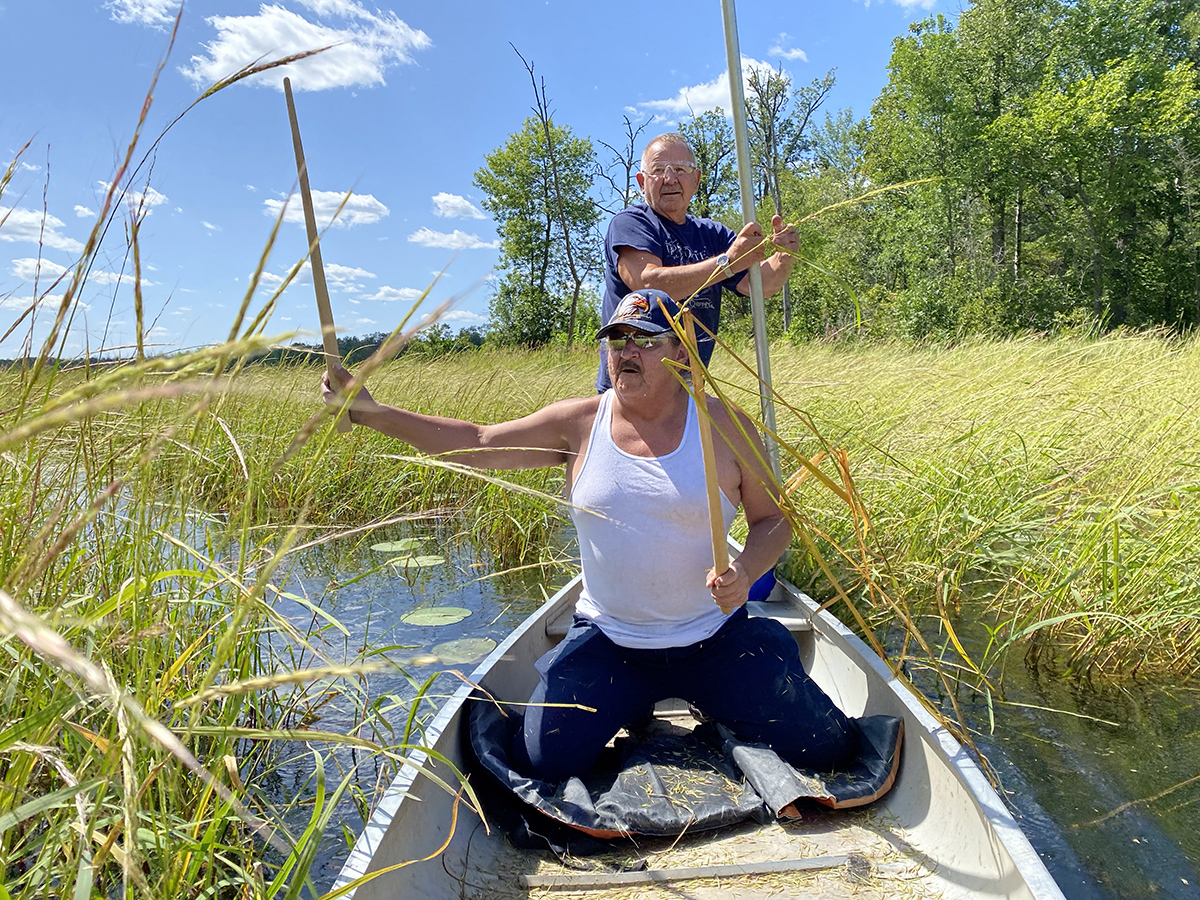

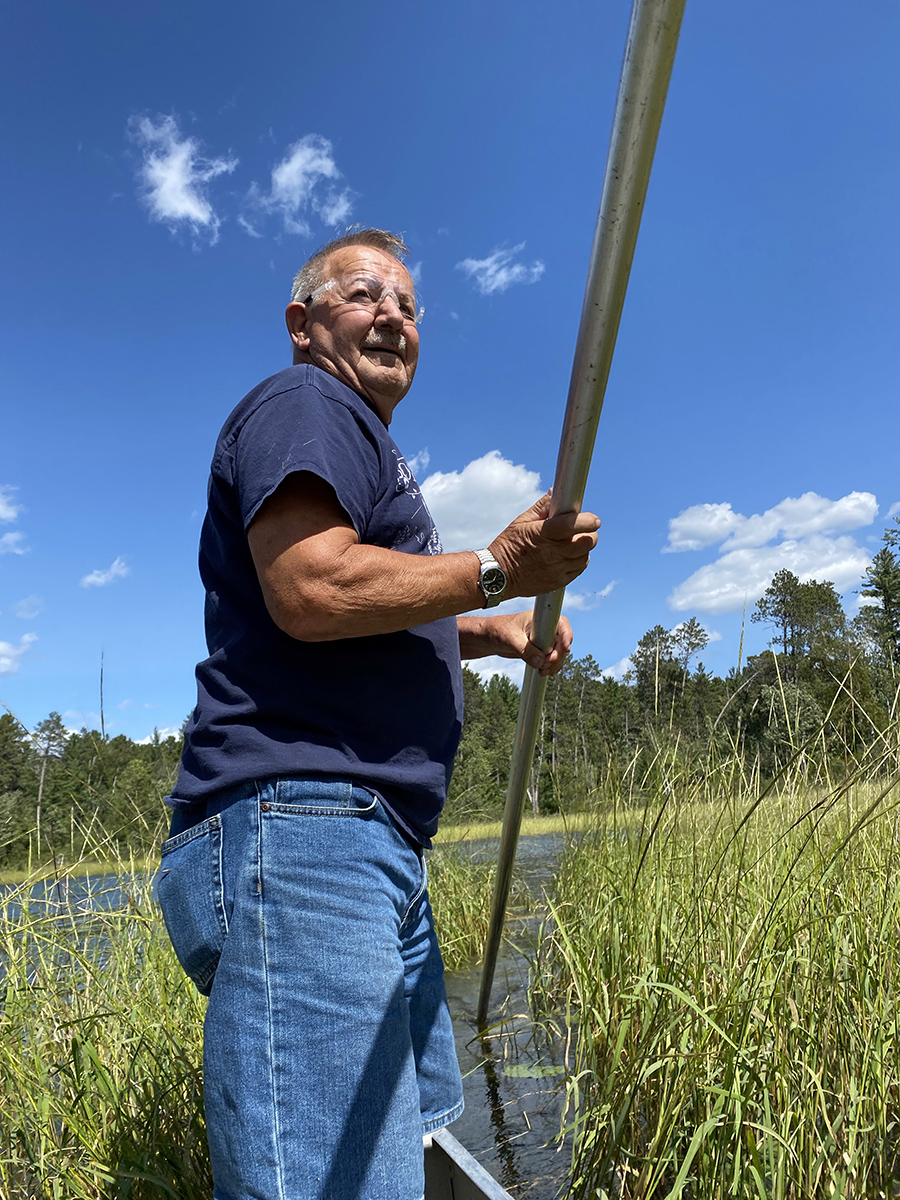
Mike Kornezos, a member of the Bois Forte Nation, and Thomas Jones, of Leech Lake, having been harvesting wild rice together on Minnesota’s lakes and waterways for about a decade. Kornezos is junior warden at St. Peter’s Episcopal Church in Cass Lake. Photo: Lynette Wilson/ENS
[Episcopal News Service – Bemidji, Minnesota] In mid-August, Mike Kornezos and his longtime ricing partner Thomas Jones were out on the lakes checking the readiness of wild rice. Harvested in early fall, wild rice – along with fish, wild berries, migratory ducks and garden-grown vegetables – has long sustained the Anishinaabe, as the Indigenous peoples of northern Minnesota are called.
Hot days, cold nights make for the best conditions, they said. In the following weeks, they would spend most mornings on the lakes in a canoe: Kornezos standing at the stern like a gondolier with long metal pole forked at the end to better use the muddy surface below as he propelled the boat along the water; Jones kneeling using the “knockers,” the smoothly carved sticks, one to hold the rice stalk steady, the other extended in one smooth, swift extension of the forearm from the elbow to thrush the rice kernel into the bottom of the boat.
A protein-rich plant, wild rice historically has grown in abundance in northern Minnesota,
NATIVE VOICES DISCUSSION
The Office of Indigenous Ministries will host, “Native Voices: A Response to The Episcopal Church’s History with Indian Boarding Schools” on Oct. 11 at 5 p.m. Eastern. For more information or to register, click here.
a region of pine forests, peatlands, rivers and lakes; it’s a cultural and culinary mainstay of the Anishinaabe, who across the Upper Great Lakes region are also known as Chippewa and Ojibwe.
“We produce more rice here, naturally, than we do anywhere else in the states,” said Elaine Fleming, an instructor at Leech Lake Tribal College, a Cass Lake community college where she teaches Anishinaabe studies and Leech Lake Nation history and nationhood, as well as survey courses on Indigenous peoples of the Americas.
“We are a nation, not a reservation,” Fleming made clear in an interview with Episcopal News Service from her home in Cass Lake on the Leech Lake reservation. “And a nation,” she said, “has four elements: language and culture, history, a land base and its own governance. When I teach, I like to break things up like that so they [students] can understand themselves as a nation. In the fall, ricing is part of that. In the spring, it’s sugarbush.”
The ability to feed itself—to have food sovereignty—is part of being a nation, she said.
In June, Episcopalians from across the United States joined with the Anishinaabe in a non-violent protest at the headwaters of the Mississippi River – Bear Creek as the Anishinaabe call it – to try to stop the pipeline. Beginning in 2016 with the Dakota Access Pipeline and the camp at Standing Rock, North Dakota, The Episcopal Church has joined interfaith solidarity actions as Indigenous peoples and other “water protectors” have stood up to multinational corporations’ energy exploration, drilling and transportation infrastructure projects. These non-violent actions have centered on water quality; they’re also about human rights violations and the rights of sovereign nations. The church also has stood with Native Alaskans, the Gwich’in, in their struggle to protect the Arctic National Wildlife Refuge from oil exploration and development. Oil drilling in the refuge poses a threat to Porcupine caribou, animals the Gwich’in depend on for food and cultural survival.
General Convention sets The Episcopal Church’s priorities. Its solidarity with the Anishinaabe is fixed in a 2018 resolution reaffirming the church’s repudiation of the Doctrine of Discovery and support for Indigenous peoples’ sovereignty over territorial resources. The resolution specifically noted the Leech Lake Band of Ojibwe’s concerns regarding the Enbridge Line 3 pipeline. When the Anishinaabe ceded territory to the U.S. government in 1855, they did so with the understanding that they would maintain their rights to hunt, fish and gather wild rice on the land.

With more than 10,000 lakes, Minnesota and Lake Superior hold a fifth of the world’s freshwater. Wild Rice has historically grown in abundance here. Photo: Lynette Wilson/ENS
On Oct. 1, after a six-year legal and regulatory battle, the Enbridge Line 3 pipeline became operational. The $9.3 billion, 338-mile pipeline replacement and expansion project carries oil across northern Minnesota, where 85% of Minnesota’s Indigenous population now live on a patchwork of reservations. The pipeline runs along reservations and ceded treaty lands. With more than 10,000 lakes, Minnesota and Lake Superior hold a fifth of the world’s freshwater. The Minnesota Department of Natural Resources has given Enbridge permission to use 4.5 billion gallons of groundwater annually.
“When people like Enbridge come in, we will battle them,” Fleming said. “We have a say about what they are doing with the land and what happens with the water, and it’s not just about us. Everybody needs the water to be clean and useable, so we’re not just fighting for Leech Lake or White Earth. We are fighting for the land and for the people.”
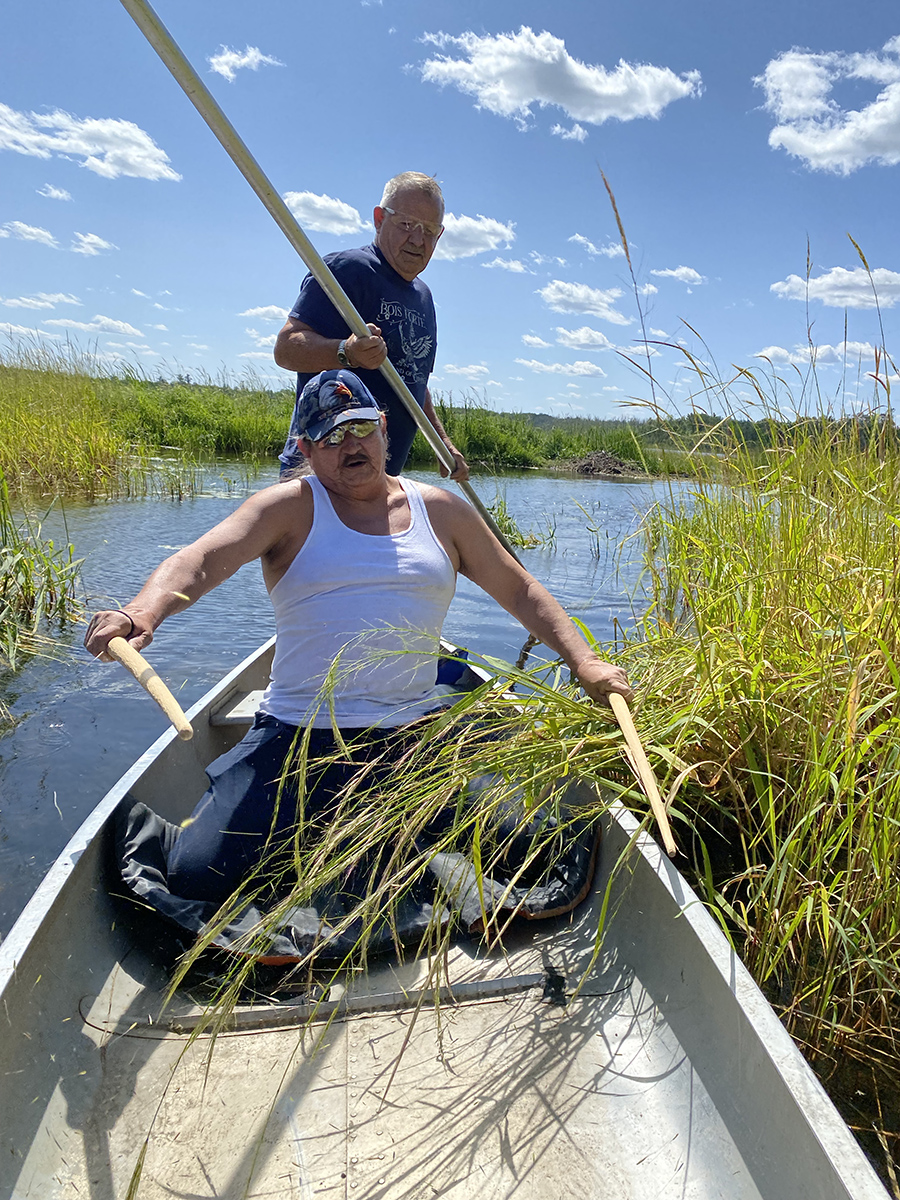
Thomas Jones demonstrates how the “knockers” are used to thresh the wild rice from the stalk. Photo: Lynette Wilson/ENS
When European settlers first arrived in North America, Indigenous peoples by some estimates numbered in the millions. By the 1890s, warfare, disease and starvation had decimated the tribes, and some 249,000 remained in the United States. Those who survived the genocide lost territory when they signed treaties designed to open the land to logging, mining, homesteaders and farming. Forced from their land, Indigenous peoples began to lose access to the fish and game, plants and berries that sustained them. When the U.S. government began issuing rations to reservations, further disrupting Indigenous peoples’ cultural and culinary traditions, the government used food and harvest season as a tactic.
“They would give us food, and a lot of times the food didn’t come on time. Sometimes the food was rotten. They would be selling [us] the food so they could profit off of it,” Fleming said. “But the one thing we could always depend on was the rice … Rice is something you can keep. For at least 10 years, it’ll be good. They understood that, and when they were treating with us, they would hold their treaty meetings in the fall purposely to influence us to sign treaties – like the Nelson Act – because they knew we wanted to get home, that we needed to be ricing.”
The Nelson Act became law in January 1889. It attempted to relocate all the Anishinaabe in Minnesota to the White Earth Reservation in the western part of the state. The expropriated land went to the timber industry and white settlers. The remaining Indigenous lands were further divided into family allotments that encouraged subsistence farming and commodity food consumption, undermining the Anishinaabe way of life.
The Anishinaabe’s “stories, mythology and cosmology all centered on honor and respect – and to this day they are fighting for the federal government to honor treaties,” the Rev. Matthew Cobb, a priest a diocese the Episcopal Church in Minnesota, told ENS. For the last four years, he has been based in Bemidji, a “border town,” at the center of three nations’ reservations extending like a wishbone with Red Lake due north, White Earth to the southwest, and Leech Lake to the southeast. He has learned to speak Ojibwe and serves three Indigenous congregations and one predominantly white, Scandinavian-heritage congregation. Cobb wrote the 2018 resolution.

Mike Kornezos, a member of the Bois Forte Nation, talks about how wild rice is a source of protein and a mainstay of the Anishinaabe diet. Photo: Lynette Wilson/ENS
The first Episcopal missionary arrived in Minnesota in 1828. The diocese was founded in 1857 and two years later, in 1859, Bishop Henry B. Whipple was elected and moved his family from Chicago’s South Side to Faribault, 50 miles south of Minneapolis. Whipple quickly established himself as a force, a successful mediator between the warring Dakota and Ojibwe tribes. As he moved his ministry north, “he controlled the territory, the missionaries of any denomination that operated in the territory,” Cobb told ENS.
“He wielded a lot of temporal and spiritual power … People recognized him as a holy man and someone they could trust. He was given an Ojibwe name meaning ‘straight talk.’ He was seen as an honest man who didn’t talk out of both sides of his mouth,” Cobb said.
Whipple saw the treaties as “covenants between the U.S. government and the Anishinaabe,” Cobb explained, and he served as a negotiator between the two as settlers and the timber industry arrived in the state.
“[So] the treaties are signed and right from the beginning they were fraudulent. Right from the beginning, Whipple says in his autobiography, the whole process the Commission on Indian Affairs was involved in was fraudulent, and, of course, he was complicit … and that was the moral duress he was under at the end of his life,” Cobb said.
Cobb expressed hope that Episcopalians can use their baptismal vows and the Eucharist, its common table, to help them confront the church’s involvement in the exploitation of Indigenous peoples and their land.
“If we were to begin to face it, we would then be able to work through that shame and get to a place of courageously honoring the treaties and respecting the dignity of every human being like it says in the baptismal covenant,” he said. “For me, the violation of that treaty rights is also a violation of our baptismal rites. And so right and rite are very closely linked.”
Fleming, who is not an Episcopalian, when asked what Episcopalians can do to become better allies, said this: “They need to learn about us … That means learning about the treaties and their violation, learning the truth about what happened in the boarding schools, the man camps, Enbridge Line 3 – and how they’ve taken the water out. But it also means learning about the people and what they’ve accomplished.

The murals at St. Peter’s Episcopal Church in Cass Lake on the Leech Lake Nation signal cultural inclusion. Photo: Photo: Lynette Wilson/ENS
“Like for our people, I think we’re pretty spectacular. We’re the ‘shining people,’ because traditionally, we had this philosophy and relationship with the Earth and the skies. And it was about respect,” Fleming said. “Learn the real history of the peoples, not just about us here but wherever you live. Understand what happened to the Indigenous peoples there so that you can teach that to your own compatriots.”
Then, she said, advocate for changes to the education system to teach about Indigenous peoples and the true history of what happened in the United States of America.
“I think in America, they all need to know the history of our peoples, the genocide of our peoples, and then what we’ve done to heal,” Fleming said. “You don’t need to come to try to heal us, you need to heal yourselves, your own minds, your own souls, and respect the world.”
The Episcopal Church repudiated the Doctrine of Discovery in 2009, joining a wider movement among Christian denominations at a time when few people understood its premise, said the Rev. Brad Hauff, The Episcopal Church’s Indigenous missioner, who is a member of the Lakota Nation.
“How can you repudiate something when you don’t even know what it is?” he said. For instance, he added, “life, liberty and the pursuit of happiness,” the God-given unalienable rights given to all humans and upheld in the Declaration of Independence did not apply to “the merciless Indian savages,” according to Thomas Jefferson.
“I think a lot of people have never read the Declaration of Independence,” Hauff said. Its denigration of Indigenous peoples “has tended to be pushed aside or ignored. People don’t talk about it. But recently, people have been talking about it, that Jefferson really was a proponent of these genocidal processes.”
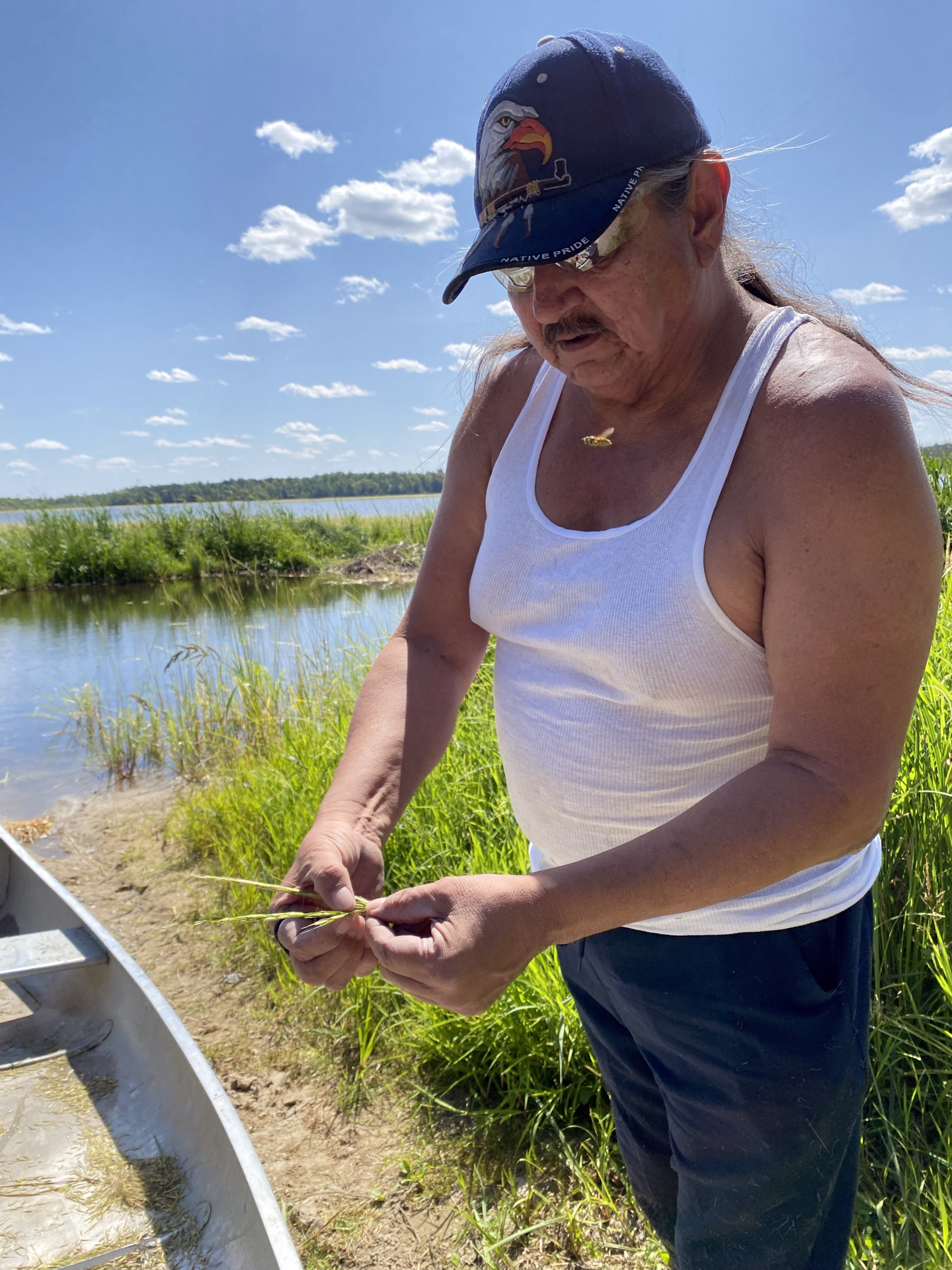
Thomas Jones determines the wild rice’s readiness. Photo: Lynette Wilson/ENS
Examining history from the cultural perspective of Indigenous peoples requires people to be willing to look critically at American and Episcopal Church history, while at the same time having the integrity to examine themselves from within, Hauff said. “In America today, even in The Episcopal Church, there are a number of people who are just fine with the traditional Columbus-discovery, Manifest Destiny-narrative. That’s their narrative. They’re proud of it, they don’t want it to change. They want Columbus Day to stay Columbus Day, not to become Indigenous Peoples Day. And these people are very vocal and politically active right now.”
Hauff noticed a shift take place nationally and in the church around 2018, around the same time General Convention called for education around the Doctrine of Discovery. By 2019, some dioceses had begun adding Indigenous Peoples Day to their calendars. Absent a formal federal declaration, Americans increasingly refer to the second Monday in October as Indigenous Peoples Day instead of Columbus Day. The Episcopal Church recently endorsed legislation supporting it as a federal holiday.
Last week, Presiding Bishop Michael Curry joined his Lutheran and Anglican counterparts in North America to designate Sept. 30 as a day of commemoration, truth and healing in solidarity with Indigenous peoples. In a statement, the leaders recognized that the churches’ repudiation of the Doctrine of Discovery begins with telling the truth; and that both U.S. and Canadian education systems perpetuate white supremacy by teaching narratives that glorify settlers’ contributions to building societies and delete or ignore those of Native Americans and First Nations peoples.
Earlier this year in July following the discovery of unmarked graves at a Canadian boarding school, Curry and House of Deputies President the Rev. Gay Clark Jennings condemned the schools, describing instances of forcible removal of children from their homes, forced assimilation and physical abuse as a “cultural genocide” that sought to erase their identity. They acknowledged that The Episcopal Church was associated with residential schools in the United States during the 19th and 20th centuries, and said the church needs to understand the legacy and commit to truth and reconciliation. The church also supported federal legislation that would establish a formal commission to investigate, document and acknowledge past injustices of the federal government’s Indian boarding school policies.
Like Fleming, Hauff stressed that American history and Indigenous peoples’ place in it include historic contributions. For instance, Fleming said, 75% of the vegetables grown today were first cultivated by Indigenous peoples in North and South America.
“We had cities,” she said. “You cannot feed yourselves by hunting and gathering when you have a city of 40,000 people. So in summer, we garden.”
Hauff stressed how Indigenous and European-American worldviews differ.
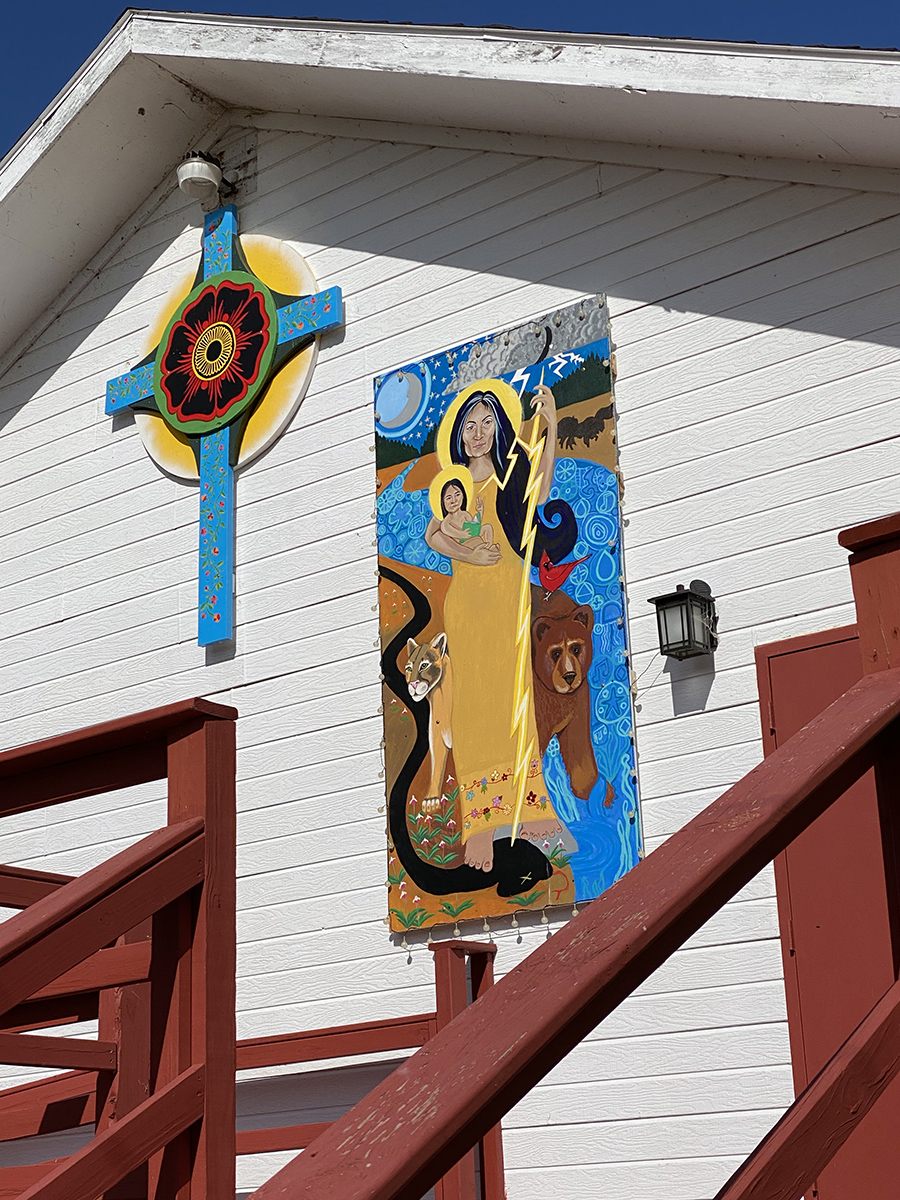
One of the murals at St. Peter’s Episcopal Church in Cass Lake pays tribute to U.S. Interior Secretary Deb Haaland, the first Native American to serve as a cabinet secretary. Photo: Lynette Wilson/ENS
“Indigenous people do not teach human dominance. We see humankind as having a place in the ecosystem of the universe. But it’s not a place of dominance, we do not have the right and we are not free to change the order of things as has been set by the Great Spirit. The Euro-American worldviews differ from that,” he said. “I believe that is why we’re seeing what is happening to our planet, and to our climate… the consequences of what happens when you teach and practice human dominance. Indigenous people have a lot to teach the dominant society about that if the dominant society would only listen. I don’t believe that we’d be in the situation that we’re in right now, with regard to the planet and the climate, if human dominance were not taught.”
Though General Convention sets the church’s priorities, much of the work happens locally. Minnesota Bishop Craig Loya joined the solidarity action in June and then, in mid-August, spent a week in residence in the state’s northwest, including Bemidji, Brainerd, Rice Lake, Cass Lake, Red Lake and Leech Lake. He visited congregations and met with tribal leaders to learn about Anishinaabe history and culture, to connect more deeply with the Episcopal Church in Minnesota’s Indigenous faith communities, and to listen and learn about both the beauty and challenges of those communities today.
“It has been such a gift to spend time with these communities, hearing stories from the past and from today. Our indigenous congregations are particularly gifted at sharing Christian life together, from baptisms to funerals and from harvest time to the dinner table. I have felt welcomed not just into worship services, but into full, rich, communal lives. I can’t wait to share that story more widely around the diocese,” Loya told Episcopal News Service during a conversation in Bemidji.
As part of his residence, the bishop spent a day with a tribal conservation officer learning about the wild rice harvest and features of the land, and how they connect to Anishinaabe history and culture. They talked about Enbridge Line 3’s threat to wild rice, the way of life centered around the rice harvest and its role, past and present, in sustaining both life and culture.
“It’s not just about the land itself but about the peoples’ generations-long relationship to the land, and to the plants and animals that populate it. That profound recognition of our interconnectedness with creation is another story I’m excited to tell,” Loya said.
-Lynette Wilson is a journalist and managing editor of Episcopal News Service.
Episcopal Church, other denominations support commission on US Native boarding schools
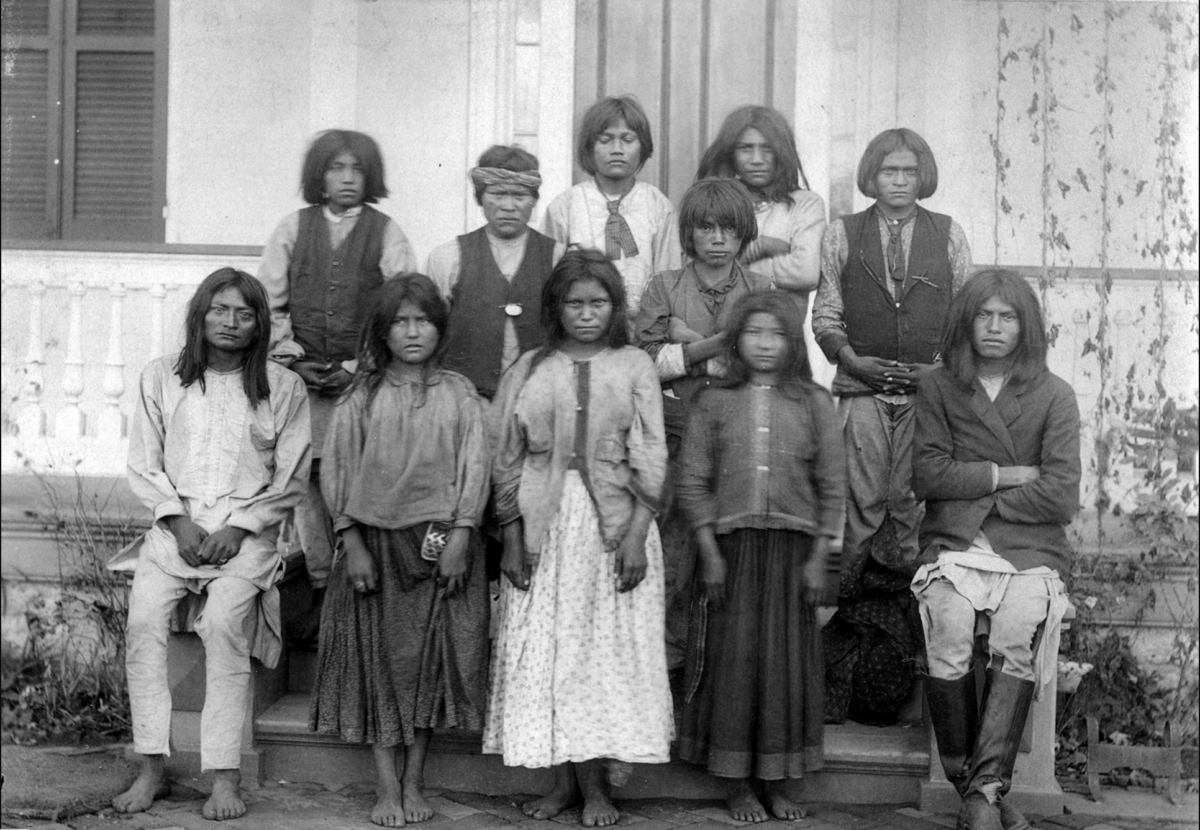
Native American (Chiricahua Apache) boys and girls pose outdoors at the Carlisle Indian Industrial School in Carlisle, Pennsylvania, after their arrival from Fort Marion, Florida, in November 1886. Photo: J.N. Choate/Creative Commons
[Religion News Service] A number of Catholic groups and Protestant denominations are calling for the United States to establish a truth and healing commission to reckon with the country’s history of boarding schools that separated thousands of Indigenous children from their families and cultures during the 19th and 20th centuries.
Their support comes as the Catholic Church and a number of Protestant denominations are beginning to investigate their own roles in those boarding schools, as many were sponsored or operated by religious organizations.
“We ask you to bring the U.S. government into this process by establishing a Commission to look truthfully and fully at the U.S. boarding school policy,” reads a letter signed Sept. 30 by seven different Protestant denominations, denominational agencies and Catholic groups.
Sen. Elizabeth Warren and the co-chairs of the Congressional Native American Caucus, U.S. Representatives Sharice Davids and Tom Cole, reintroduced the Truth and Healing Commission on Indian Boarding School Policies in the United States Act earlier that day, which many observed as a National Day of Remembrance for U.S. Boarding Schools.
The commemoration, encouraged by the National Boarding School Healing Coalition and supported by several mainline Protestant denominations in the U.S., coincided with Canada’s first National Day for Truth and Reconciliation and the Indigenous-led Orange Shirt Day.
Warren originally had introduced the Truth and Healing Commission on Indian Boarding School Policies in the United States Act last year with then-U.S. Rep. Deb Haaland. Haaland — now secretary of the U.S. Department of the Interior, which oversaw the country’s boarding schools — since has launched a Federal Indian Boarding School Initiative to compile a thorough account of boarding school policy and its ongoing impact on Native Americans.
Like Canada’s Truth and Reconciliation Commission, which issued its final report on its own residential school system for Indigenous children in 2015, the U.S. commission would investigate, document and acknowledge the past injustices of its boarding school policy. It also would develop recommendations for Congress to help heal the historical and intergenerational trauma passed down in Native families and communities and provide a forum for boarding school survivors to share their experiences, according to a written statement issued by Warren’s office.
In support of the commission, the letter from Catholic groups and Protestant denominations insisted that “there is so much that we don’t know and so much left to do. Given the scale of the task and the federal government’s own central role, a federal commission is needed.”
Those denominations and other groups include The Episcopal Church, Evangelical Lutheran Church in America, Franciscan Action Network, Friends Committee on National Legislation, Jesuit Conference Office of Justice and Ecology, Christian Reformed Church of North America’s Office of Race Relations and the United Methodist Church’s General Board of Church and Society.
In the letter, they note the country’s boarding school policy “was morally wrong and contrary to the teachings of our own faith.”
Their research so far confirms those schools separated Indigenous children from their families and communities, often against the wishes of their parents, according to the letter.
While in the schools, children were punished for speaking their Native languages or practicing their traditional spirituality and culture. Some children were physically, sexually or emotionally abused. Some never returned home.
“Facing the sins of our past, committed in the name of Christianity, has been challenging. But it is also proving to be a tremendous blessing. Confronting the truth is a crucial first step toward laying a new foundation for just relationships moving forward,” according to the letter.
Calls for the U.S. to launch a commission similar to Canada’s have intensified since the northern country confirmed earlier this year that the remains of more than 1,000 Indigenous children are buried near former residential schools.
The U.S. is believed to have had twice as many boarding schools as Canada did.
Diocesan Convention to be held in person Nov. 13 in Riverside
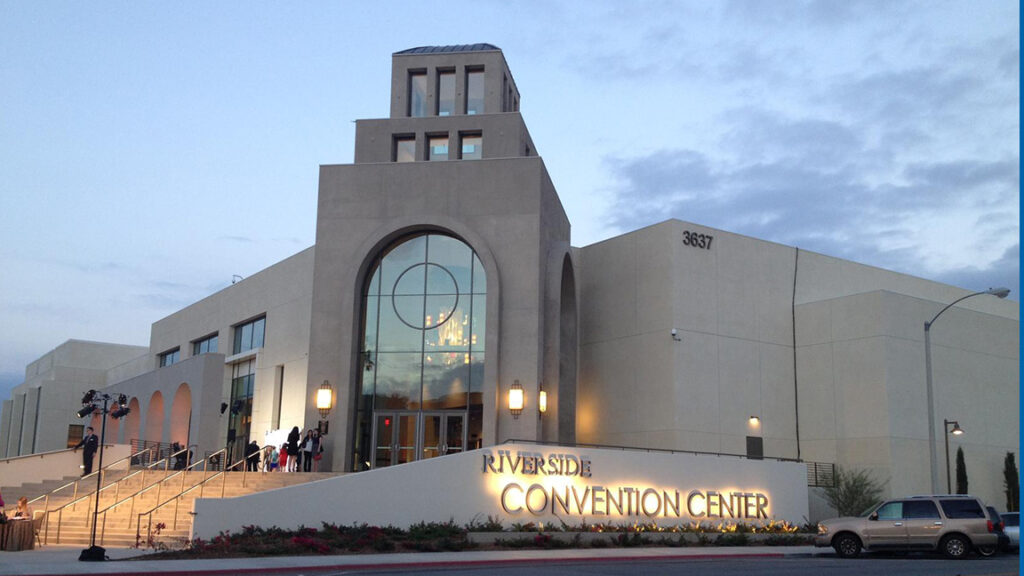
[The Episcopal News] The 2021 meeting of Diocesan Convention will take place in person on Saturday, Nov. 13 at the Riverside Convention Center, concluding with Eucharist. Along with the usual reports of work, approval of the next year’s budget, election of officers and other business, the convention will host the biannual Margaret Parker Lecture, delivered this year by environmental advocate Mary Nichols (see related story here).
The convention Eucharist was originally scheduled for Nov. 14 at St. John’s Cathedral. Bishop John Harvey Taylor announced the change in plans on Oct. 5 in an email to clergy of the diocese.
“A Sunday service was a great idea at the time, when many of you were still live-streaming,” Taylor wrote. “With most of our churches back in person, we don’t want to do anything to interrupt your folks’ expectations.”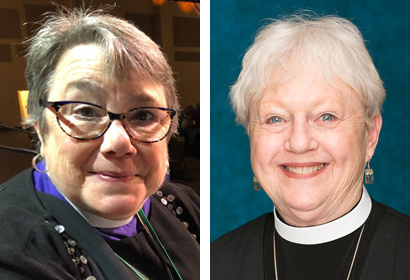
Bishop Diane M. Jardine Bruce (left) will celebrate the convention Eucharist at the end of business on Nov. 13. Laura Siriani, archdeacon of the diocese, will preach.
Archdeacon Laura Siriani will be the convention Eucharist preacher. Bishop Suffragan Diane M. Jardine Bruce, who is expected to be confirmed early in November as bishop provisional for the Diocese of Western Missouri, will celebrate. The convention will be her last official event as bishop suffragan of the Diocese of Los Angeles.
Delegates who prefer not to attend the business session in person may take part via Zoom webinar. Information about remote participation has been sent to registered delegates.
According to Secretary of Convention Steven Nishibayashi and Convention Coordinator Samantha Wylie, convention plans depend on how well the Southland is coping with the coronavirus outbreak; proceedings will shift entirely online if it becomes necessary to safeguard the health of delegates, visitors and exhibitors.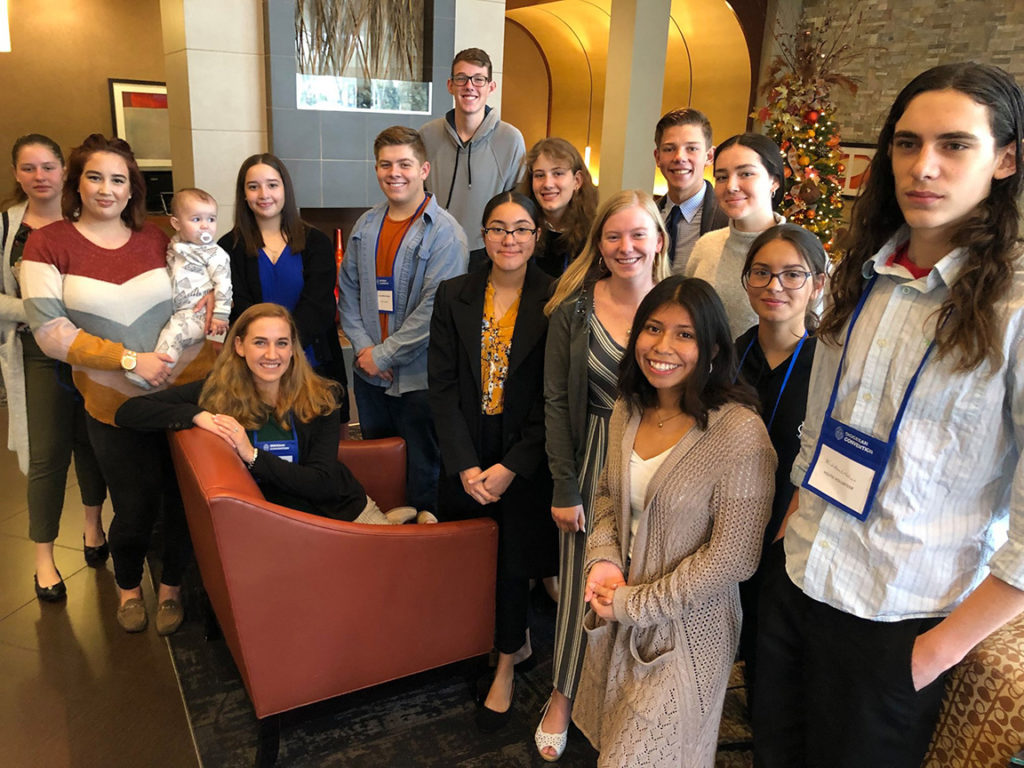
Some of the youth working at the 2018 meeting of convention gather for a photo by Bishop John Harvey Taylor.
Youth presence at convention
Since Diocesan Convention is back in person this year, the diocesan youth ministry once again will need high school students and young adults to help run various aspects of the meeting. Young people guard the doors, staff the microphones for floor discussions, run errands and generally help keep the convention running smoothly.
A select group of young people will have the opportunity to join the youth press corps, which will work with The Episcopal News to cover the convention. Assignments will include photographers, videographers and reporters.
Youth volunteers will gather in Riverside on Friday, Nov. 12 at 6 p.m. Dinner will be provided, as will hotel rooms. All youth work will be supervised by adult leaders. The youth corps’ responsibilities will begin early on Saturday, Nov. 13 and be completed at the close of convention business at about 5 p.m.
An online training session for youth volunteers will be held before the convention. Details are pending and will be announced soon. Youth will be asked to contribute about $50 to help cover food and room costs.
For more information and to register, click here. For additional information, or to inquire about places on the press corps, contact Gabriel Vasquez-Reyes, diocesan youth coordinator, at GVazquez-Reyes@ladiocese.org
Interested in running for office?
As always, the convention will elect officers to several boards, commissions and committees. Offices open for election are listed here, along with nomination forms and instructions.
To learn more about the various groups and how they work, see the following Episcopal News articles (from 2020):
- Corporation of the Diocese: legal, financial responsibility ‘from the midst of faith’
- Diocesan Investment Trust: Doing the right thing for mission, ministry
- Standing Committee: ‘holy workings’ of the church
- Diocesan Council: Connecting congregations to the diocese with a ‘remarkable team of leaders’
- Commission on Ministry: Discerning God’s call, going where it leads
Accommodations
Delegates and clergy may reserve rooms at the Mission Inn or Marriott Hotel in Riverside for Friday or Saturday night; click here for the reservation links.
Childcare will be provided during the business session on Saturday for infants and preschoolers. “Camp Convention,” to be staffed by Camp Stevens, will offer activities and fun for grade school and middle school-age kids. There is no charge. More information will be posted soon.
Pre-convention meetings
Pre-convention presentations will be held in October via Zoom. The three sessions are:
- Deaneries 3, 4 & 5: Saturday, October 23, 10 a.m.
- Deaneries 6, 7 & 8: Sunday, October 24, 3 p.m.
- Deaneries 1, 2, 9 & 10: Saturday, October 30, 10 a.m.
These meetings will only be the diocesan portion of the usual deanery assemblies. Clergy and convention delegates will be pre-registered for these meetings, and will receive Zoom links from the secretary of convention’s office. Information on the annual meeting specific to each deanery will be provided by the dean.
For full convention information, visit the website here. More details will be posted in future issues of the Episcopal News Update.
This article was updated on Oct. 6 to reflect changes in the convention schedule and information announced since publication.
Presiding Bishop, US Rep. James Clyburn rally church support for historically Black colleges
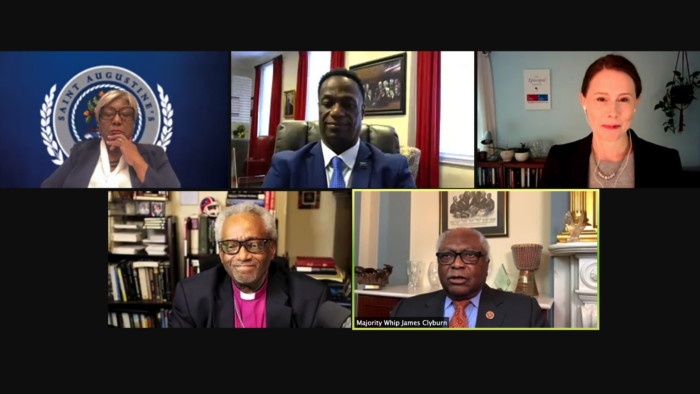
House Majority Whip James Clyburn, bottom right, speaks during a Sept. 29 webinar about historically Black colleges and universities, with Saint Augustine’s University President Christine Johnson McPhail, top left, and Voorhees College President Ronnie Hopkins, top center. Presiding Bishop Michael Curry also attended the webinar, which was moderated by Rebecca Blachly, top right, the church’s director of government relations.
[Episcopal News Service] House Majority Whip James Clyburn of South Carolina joined Presiding Bishop Michael Curry and the presidents of Saint Augustine’s University and Voorhees College in a Sept. 29 webinar promoting the role that historically Black colleges and universities have played in educating students to participate in and contribute to American society.
Saint Augustine’s in Raleigh, North Carolina, and Voorhees in Denmark, South Carolina, are the two historically Black institutions, commonly referred to as HBCUs, that have deep ties to The Episcopal Church. Clyburn, the third-ranking Democrat in the House, has been a congressman since 1993, representing South Carolina’s 6th District, which includes Voorhees.
“I’m a big champion of HBCUs,” Clyburn said, noting that he is a graduate of an HBCU, South Carolina State University in Orangeburg, and has received honorary degrees from Saint Augustine’s and Voorhees. “HBCUs are very important. They are historical treasures, and I commit myself to trying to restore every historic building on those campuses and help restore a sense of pride.”
The webinar, which drew nearly 400 viewers, was promoted by the church’s government relations and development offices, the latter of which oversees the Absalom Jones Fund and an annual donation campaign timed with the Feb. 13 feast day celebrating the first Black Episcopal priest. Director of Government Relations Rebecca Blachly moderated the discussion.
Visit The Episcopal Church’s Absalom Jones Fund page if you would like to make a donation.
“This is a moment where we’ve seen HBCUs in the spotlight more,” Blachly said, “and I think people are realizing the critical role these institutions play in our nation.
The schools have been in the news lately because of the debate over money for them included in the Biden administration’s proposed federal spending plan and because Vice President Kamala Harris graduated from an HBCU, Howard University in Washington, D.C.
Curry’s parents and extended family attended HBCUs, and as a parish priest in Baltimore, Maryland, he said many of the young people he ministered to would have been left behind academically if not for the boost they received while attending a historically Black college.
“These universities are taking young people and molding them and forming them, not just academically, but forming them spiritually and in terms of character and the moral fiber that they will need in order to make it in this world,” Curry said. “That’s an incredible gift.”
Historically Black colleges and universities were founded in the post-Civil War period to provide educational opportunities to Black men and women who were excluded from white institutions of higher learning because of segregation.
Saint Augustine’s was established in 1867 by The Episcopal Church and opened its doors the following January. The school that later would become Voorhees College was founded in 1897, and The Episcopal Church has supported it since 1924.
About 100 such schools are still open today across the United States, accepting students of all races. Enrollment at HBCUs has been in decline since hitting a peak in 2010, when 327,000 students attended one of the colleges. That trend mirrors an overall decline at all degree-granting institutions in the past decade, according to the federal government’s National Center for Education Statistics.
HBCUs still fill a “special niche” in the academic world, Clyburn said, but their importance often is overlooked by the wider society. “We’ve never just spent enough time getting people to understand what their role has been,” he said. (Clyburn also participated in a Sept. 30 church webinar promoting his legislation to make “Lift Every Voice and Sing” the country’s national hymn.)
The Episcopal Church’s recent work with historically Black colleges and universities coincides with a greater emphasis on racial reconciliation under the leadership of Curry, who was elected in 2015 as the first African American bishop to head the church. The church’s last two triennial budgets included more than $1.6 million for Saint Augustine’s and Voorhees, and the church is in its fourth year of raising additional money for the two schools through its Absalom Jones Fund, with proceeds topping $200,000 since 2018.
Saint Augustine’s “was founded to train freed slaves and bring folks into the ministry as ordained ministers in The Episcopal Church,” said Christine Johnson McPhail, the university’s president. The university is “still here and thriving today,” she said, though its mission has broadened as it prepares its students to enter the workforce and to contribute to society.
Voorhees encourages its students to volunteer in the local community, said Ronnie Hopkins, the college’s president. Students benefit from the welcoming environment on campus, but they don’t learn in isolation, he said. “We have a responsibility to reach out in the community.”
HBCUs “have a special love in our hearts for students that are underachievers, for students that are struggling,” Hopkins said, and the schools have a track record of responding to the needs of African American students. At the same time, he said, the schools are open to everyone and attract students who bring a variety of ability levels, talents and aspirations.
“HBCUs today, we are absolutely magnificent institutions. We are top institutions in the country,” he said. “We work with these students, and we take them to the next level of excellence.”
– David Paulsen is an editor and reporter for Episcopal News Service. He can be reached at dpaulsen@episcopalchurch.org.
Movement grows to honor Bishop Barbara Harris with a feast day on her date of death
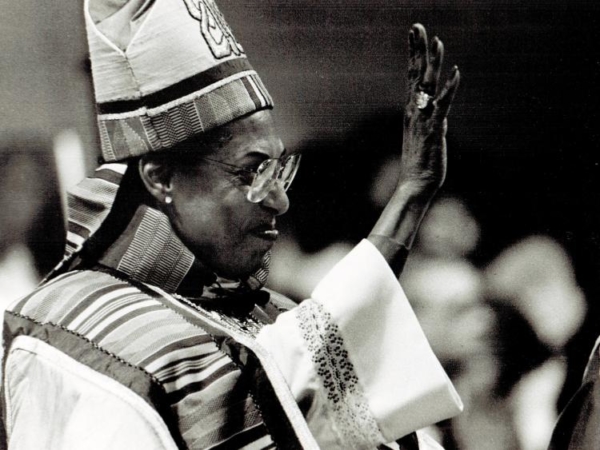
The Rt. Rev. Barbara Harris at her historic consecration service on Feb. 11, 1989. Photo: David Zadig/Diocese of Massachusetts
[Episcopal News Service] Dioceses and Episcopal leaders are joining a growing movement to add Bishop Barbara Harris to The Episcopal Church’s calendar of Lesser Feasts and Fasts. They are lining up diocesan resolutions that will ask the 80th General Convention to advance her elevation to the status of a church saint at its meeting in July 2022, just two years after her death.
Harris was consecrated in 1989 as bishop suffragan of the Diocese of Massachusetts, becoming the first female bishop in the Anglican Communion. She retired in 2002 but remained an active and prominent figure in The Episcopal Church and a role model for younger generations of Episcopal leaders until her death March 13, 2020, at age 89. Harris also is remembered for her support of social justice causes and her part in the first wave of women to be ordained as Episcopal priests.
“Bishop Barbara Harris’s life and ministry called out to us to strive for justice and truth as manifested in Scripture in our church and world,” Bishop Gayle Harris, the Diocese of Massachusetts’ current suffragan, said in an email statement to Episcopal News Service. “Her voice was an uncompromised clarion call for full inclusion and equality in our corporate life as the Body of Christ from the beginning of her ministry as a lay leader and throughout her episcopacy.”
In February 2021, she and Massachusetts Bishop Alan Gates issued an invitation to congregations and dioceses across the church to celebrate the life of the late bishop on the first anniversary of her death. Gates and Harris then asked for brief descriptions of those commemorations because “such accounts may become part of the testimony for subsequent consideration of churchwide observation.”
In November, Massachusetts will vote on a resolution at its diocesan convention endorsing the push to create a churchwide feast day on March 13 honoring Harris, echoing a resolution approved in July by the Union of Black Episcopalians. Other dioceses are considering similar resolutions, including California, Los Angeles, Missouri and New York.
Proponents plan to cite examples of local commemorations in making their case for adding Harris to the liturgical calendar as one of its optional observances, alongside the church’s principal feasts and holy days that are listed in the Book of Common Prayer. The church’s Standing Commission on Liturgy and Music, or SCLM, has emphasized such a record of “local, organic observance” be part of the “Principles of Revision” for Lesser Feasts and Fasts, which the commission submitted to the 80th General Convention for consideration. (The guidelines can be found here, starting on page 11.)
“There should be a history of people having celebrations of someone they want on the calendar. It shouldn’t be top down,” Byron Rushing, vice president of the House of Deputies, told ENS in an interview. He thinks that qualification has been met by the widespread enthusiasm for commemorations of Harris since her death.
The pandemic forced church leaders temporarily to shelve plans for large-scale, in-person memorial services honoring Harris. While such memorials are still pending, numerous virtual services were held to mark the one year anniversary of her death.
Rushing and other advocates of a Harris feast day also are in favor of expediting her inclusion in the church calendar. The Episcopal Church’s Canons don’t specify rules for conferring sainthood, though individuals traditionally aren’t considered until 50 years after death.
“The passage of time permits the testing and flowering of their Christian witness,” SCLM says in its guidelines.
Exceptions, however, can be made with approval of General Convention. In 2018, for example the 50-year precedent was waived when the 79th General Convention approved the addition of Thurgood Marshall, Pauli Murray and Florence Li Tim-Oi.
Because the liturgical calendar is part of the Book of Common Prayer, additions must be approved by two successive General Conventions. If approved, a trial-use liturgy for a Harris feast day would return to General Convention for final approval in 2024.
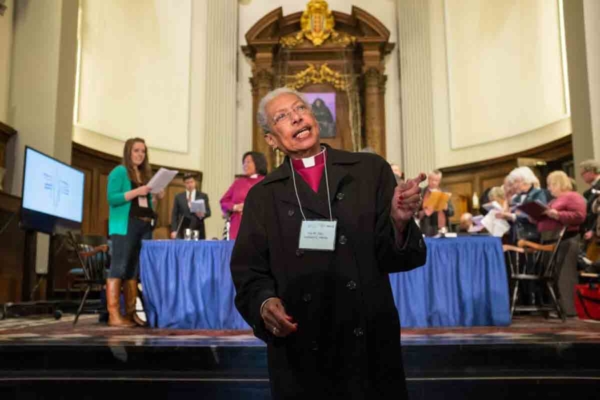
Retired Bishop Suffragan Barbara Harris leads members of the Diocese of Massachusetts in singing hymns during its 2014 electing convention. Photo: Diocese of Massachusetts
A feast day honoring Harris already has a leading contender for its liturgical propers. Missouri Bishop Deon Johnson wrote a prayer to be used as a collect honoring Harris, and he selected accompanying biblical readings, in consultation with one of Harris’ close friends, the Rev. Sandye Wilson. Those propers now are being used in Johnson’s St. Louis-based diocese and were recommended by the Massachusetts bishops for use there and in other dioceses.
Johnson told ENS that Harris served as his mentor while he was attending General Theological Seminary in New York, and “she’s always been a role model figure for me throughout her ministry.”
She congratulated him when he was elected bishop in November 2019, but she died before he was consecrated in June 2020. For that ceremony, Johnson chose to honor her with the propers he had written.
The collect calls on God to ”defend us in our own day to make no peace with oppression; that boldly following the example of your servant Barbara Clementine Harris, chosen bishop in your church, we may strive not for ease or fame but gladly toil and walk with you all along our pilgrim journey.”
Missouri is drafting its own resolution calling for a churchwide feast day on March 13, which Johnson said is deserved because of “her example in being Christ’s hands and heart for social justice and welcome in The Episcopal Church.”
Even before being elected bishop, Harris “was an outstanding minister for social justice in The Episcopal Church,” Rushing said, citing her work in the civil rights movement, her advocacy for women’s equality and her ministry to prison inmates.
“She had a deep history of social justice work,” Rushing said. “That of course is one of the reasons why Massachusetts elected her.”
– David Paulsen is an editor and reporter for Episcopal News Service. He can be reached at dpaulsen@episcopalchurch.org.
‘My Name Is Pauli Murray’ brings trailblazing Episcopal saint’s story to a wider audience
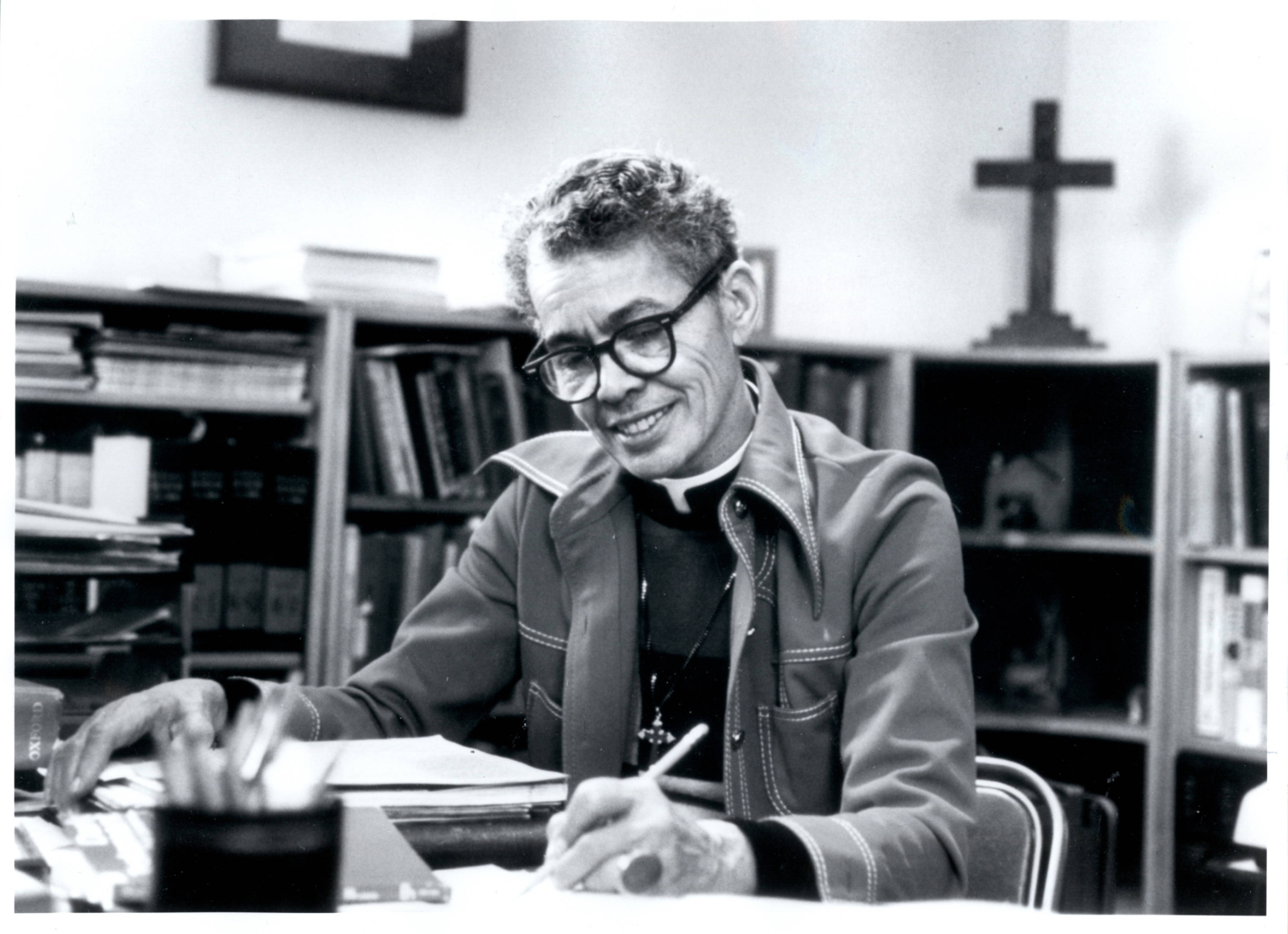
The Rev. Pauli Murray, the first Black woman ordained an Episcopal priest. Photo: Carolina Digital Library and Archives/University of North Carolina at Chapel Hill
[Episcopal News Service] In the new documentary “My Name Is Pauli Murray,” filmmakers Betsy West and Julie Cohen paint a picture of an unsung trailblazer who remains relatively unknown despite her lasting influence on American society. Episcopalians know her as the first African American woman to be ordained a priest and as a pioneer in the struggles for racial and gender equality. But many may not know about other important aspects of her life, such as her struggle to come to terms with her gender identity in an era long before transgender people were accepted in mainstream society.
When West and Cohen came across Murray’s story while working on their previous film (“RBG,” the Ruth Bader Ginsburg biopic), they wondered why such a pivotal figure wasn’t a household name.
“‘Why didn’t we know this person?’ was the first question everybody asked,” West told Episcopal News Service, “and could we do something about it?”

The poster for “My Name Is Pauli Murray.”
The result, “My Name Is Pauli Murray,” premiered online in January at the Sundance Film Festival and is now playing in select theaters. Washington National Cathedral will screen the documentary for an in-person audience on Sept. 30. It will stream on Amazon Prime beginning Oct. 1. It will also be shown online the same day through the Church of the Heavenly Rest in New York, followed by a discussion with West and Presiding Bishop Michael Curry. The film, which incorporates excerpts from Murray’s diaries and memoirs, shows how she laid the groundwork for future achievements for racial and gender equality.
Murray is celebrated on July 1 in The Episcopal Church’s “Holy Women, Holy Men” calendar of saints, and an increasing number Episcopal leaders – especially Black and LGBTQ+ people – cite her as an influence. Trinity Church Wall Street and the Diocese of North Carolina are supporting partners of the Pauli Murray Center for History and Social Justice at Murray’s childhood home in Durham, North Carolina.
Murray was undaunted by the fact that she was often the first and/or only Black woman in the positions she held. Fifteen years before Rosa Parks was arrested for refusing to move out of a whites-only section on a bus, Murray and a friend did the same in Virginia, though their case did not gain momentum the way Parks’ did. In her legal career, she was among the first to argue the unconstitutionality of “separate but equal” laws, an argument cited 10 years later in Brown v. Board of Education by Supreme Court Justice Thurgood Marshall, who called her book on segregation laws “the bible of the civil rights movement.” Ginsburg used Murray’s arguments in a brief she wrote – listing her as a co-author – while arguing Reed v. Reed, the 1971 Supreme Court case that banned gender discrimination based on the 14th Amendment’s equal protection clause.
Part of what makes Murray significant today was her commitment to intersectionality: the idea that social justice movements for different groups should support each other rather than work alone. As a Black woman experiencing discrimination based on both her race and her gender – a situation she described as “Jane Crow” – Murray supported the civil rights and feminist movements. But intersectionality was not as common then as it is today, and Murray’s penchant for crossing boundaries is one reason she didn’t achieve wider renown, West said.
“The civil rights movement was not as open to acknowledging the contributions of women as it should have been, and the women’s movement was pretty dense at times about recognizing the needs and the contributions of African American women,” West told ENS. “The concept of Jane Crow really is intersectionalism. It’s a brilliant way to express the double bind that African American women find themselves in, and it was certainly true for Pauli.”
Another factor was Murray’s sexuality and gender identity. In her diaries, Murray described having relationships with women but feeling that she was not a lesbian but a man living in a female body. This experience would today be classified as gender dysphoria and might have led Murray to live as a transgender man or a nonbinary person, the film suggests. The film also considers what pronouns should be used to describe Murray, who used she/her pronouns to describe herself, though some today speculate that Murray would have preferred they/them or he/him. In any case, Murray did not have those options in the mid-20th century.
“The difficulty of living a somewhat secret life – the problem of feeling so strongly of having a male identity in what everybody says is a female body and not being able to express that – plus having what would be considered lesbian relationships at a time when that was not accepted as well – may have caused Pauli to be a little bit less up front in taking leadership roles,” West speculates. “It didn’t stop Pauli, certainly, from speaking out, having contact with lots of very powerful, important people, but Pauli didn’t stick around to take the credit for a lot of the ideas.”
The Episcopal Church is one place, West said, where Murray received due recognition.
“A lot of people say, ‘Why didn’t I know about Pauli Murray?’ There are a lot of Episcopalians who know about Pauli Murray,” West told ENS. “The church has been one place that has lifted up Pauli’s name.”
– Egan Millard is an assistant editor and reporter for Episcopal News Service. He can be reached at emillard@episcopalchurch.org.
Jefferts Schori, Little and Brookhart take new roles as visiting bishops in the Diocese of Los Angeles
[The Episcopal News] The departure of Bishop Suffragan Diane M. Jardine Bruce to become bishop provisional of the Diocese of West Missouri – pending its convention vote in early November – left Bishop Diocesan John Harvey Taylor with a dilemma: How to make sure that each congregation in the Diocese of Los Angeles is able to welcome an episcopal visitation at least once every three years, in accordance with church canons – and ideally more often.
On Sept. 29, Taylor announced the solution: Three distinguished retired bishops of the church will visit congregations of the diocese in the coming year – the Rt. Rev. Katharine Jefferts Schori, former presiding bishop of the Episcopal Church and former bishop of the Diocese of Nevada; the Rt. Rev. Edward S. Little, seventh bishop of the Diocese of Northern Indiana; and the Rt. Rev. C. Franklin Brookhart, ninth bishop of the Diocese of Montana. Among them, they are expected to fill most of the newly vacant assignments.
The Rt. Rev. Chet Talton, sixth bishop suffragan of Los Angeles, who celebrated his 80th birthday last week, looks forward to returning to the episcopal rota soon, Taylor said.
“Bishops Jefferts Schori, Little and Brookhart will bring to our congregations a wide range of experience that will make for rich conversations and new points of view,” said Taylor when announcing the arrangements. “I’m grateful to all of them for stepping up to help fill the considerable void that Bishop Bruce will leave when she takes up her new ministry in West Missouri.”
The three bishops will visit congregations on Taylor’s behalf to celebrate, preach and offer confirmation, reception and renewal of baptismal vows. There are no plans at this time to call for the election of a bishop suffragan, or to add assisting bishops to the diocesan staff, Taylor said.
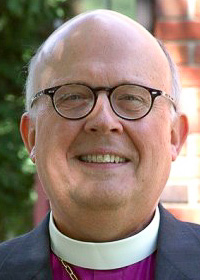
C. Franklin Brookhart
Bishop Brookhart
C. Franklin Brookhart, Jr. retired in 2018 after 15 years as ninth bishop of the Diocese of Montana. He began visiting congregations in the Diocese of Los Angeles in early 2020, but his schedule was interrupted by the COVID quarantine.
Born in West Virginia and raised in West Virginia and Ohio, Brookhart graduated from Ohio’s Wittenberg University and attended divinity school at Vanderbilt University. He received his master of divinity degree from Lutheran Theological Seminary; his doctorate in homiletics was conferred by United Theological Seminary.
Before his election as bishop of Montana, he was a parish priest in West Virginia, where he also was the bishop’s deputy for ecumenism. He helped to prepare the “Call to Common Mission” statement that established full communion between the Episcopal Church and the Evangelical Lutheran Church in America (ELCA).
During his tenure as bishop, Brookhart was actively involved with community service organizations and served as adjunct faculty for United Theological Seminary (Methodist) and Wheeling Jesuit University. He continued his ecumenical work as co-chair of the United Methodist-Episcopal Bilateral Dialogue and as a member of the General Convention legislative committee and Episcopal Church standing committee on ecumenical and interreligious relations.
Brookhart is the author of Living the Resurrection: Reflections After Easter; Journey with Jesus: Encountering Christ in his Birth, Baptism, Death and Resurrection; The Language of Love: A Basic Christian Vocabulary; and, most recently, Washing and Well-Fed: How the Sacraments Change Everything.
He and his wife, Susan Moyer Brookhart, a private educational consultant, now live in Los Angeles. They have two adult daughters.
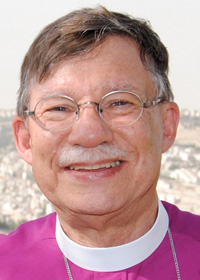
Edward Little
Bishop Little
Ed Little returned recently to Los Angeles, where he earned his bachelor’s degree from USC and later served as vicar and first rector of St. Joseph’s Church, Buena Park. He was rector of All Saints Church, Bakersfield, when he was elected as bishop of the Diocese of Northern Indiana in 1999.
A native of New York City, Little earned his master of divinity degree from Seabury-Western Theological Seminary. He was ordained to the diaconate and priesthood in 1971 in the Diocese of Chicago. During his episcopate he focused on congregational development, helping the mostly small churches of his diocese to expand their ministries by addressing needs in their communities. His efforts also resulted in a thriving Spanish-language ministry as the Latino population of the area grew.
Little was recently married to Claudia Thompson. Between them, their family includes five adult children, eight grandchildren and two happily compatible dogs. They live in Long Beach.
He has written several books, including Ears to Hear: Recognizing and Responding to God’s Call; Joy in Disguise: Meeting Jesus in the Dark Times; and most recently The Heart of a Leader, in which he explores Paul’s second letter to Timothy as “a training manual, a book of encouragement, and an outline of how a leader guides the church,” as he told his publisher, Forward Movement, in a 2020 interview.
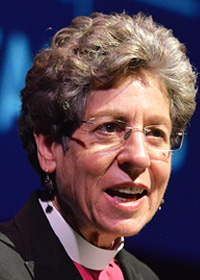
Katharine Jefferts Schori
Bishop Jefferts Schori
Katharine Jefferts Schori was elected as presiding bishop of The Episcopal Church in 2006 and served until 2015, the first woman in that role and the first to lead a province of the Anglican Communion.
As presiding bishop, Jefferts Schori championed the United Nations’ Millennium Development Goals, issues of domestic poverty, climate change and care for the earth, and equal inclusion of LGTBQ Episcopalians. She constantly reminded church members that The Episcopal Church is an international body, with 11 dioceses serving 17 nations outside the United States. Her tenure was marked by controversy as some congregations departed the church over issues of sexuality and the rights of women.
Born in Pensacola, Florida, she grew up in Seattle and New Jersey. She holds a bachelor’s degree in biology from Stanford University, and a master of science degree and a Ph.D, both in oceanography, from Oregon State University. She was a research scientist before she discerned a call to ordained ministry. She earned a master of divinity degree from Church Divinity School of the Pacific and was ordained in 1994.
She was a priest, university lecturer and hospice chaplain in Oregon before she was elected bishop of Nevada in 2001. Her skills as an instrument-rated pilot were handy as she visited the far-flung congregations in her diocese, which encompasses the entire state.
After her nine-year term as presiding bishop, she served for two years as a visiting bishop in the Diocese of San Diego. She is the author of many articles and books, including The Heartbeat of God: Finding the Sacred in the Middle of Everything (with Joan Chittister); A Wing and a Prayer: A Message of Faith and Hope, and Gathering at God’s Table: The Meaning of Mission in the Feast of the Faith.
Jefferts Schori and her husband, retired mathematician Richard Miles Schori, live in Nevada. Their daughter, Katharine, was a pilot in the USAF for more than 10 years. She and her family live in Oregon.