August 20, 2017
Pastor Mark Bradshaw
“It is not fair to take from the children’s food and throw it to the dogs.”
I think we can safely assume that our Lord is tired.
John had lost his head, and now Jesus has lost his cool.
And who can blame him, everytime he tries to get away for some quiet someone sees him, and before long there is a crowd pressing in.
The people are desperate and in need and Jesus is full of compassion and God has made it evident that through Jesus healing flows. Then one day Jesus decides he needs to get up and go, head to the coast and outside of the borders of Israel where he can enjoy that sweet Mediterranean breeze, put his feet in the sand and watch the sunset. Perhaps Jesus was feeling overwhelmed, weary under the weight of it all. The more people he healed the more aware he became of how many were still in need. For every lost sheep that our Good Shepherd carried back into the fold there seemed to be two new wolves, ready to devour. And so Jesus, feeling hemmed in, goes on a retreat. Jesus decides to practice a little self care, hoping for a certain level of anonymity. Yet, and notice this, whereas Jesus was seeking to find refreshment and renewal outside of his borders geographically, God sends someone to Jesus who is outside of his ethnic and social borders in order to get him back on track. To put it bluntly, God sends his Son a woman to set him straight… to expand his borders… to increase his imagination… to broaden his perspective.
In the television industry, it really has become a type of art to recap the previous episodes of a season, often in only 1-2 minutes, as a means of bringing the viewer up to speed. The current episode plays a specific role within the overall story and the reason for the opening recap is to refresh the audience’s memory as to how it relates to a few specific strands within the overall story line.
Now, at first glance it is surprising that this morning’s Gospel made it past the final edits. Any of you wish this was a deleted scene, clearly out of character for Jesus? And yet, as we may be standing here scratching our heads the observant disciple will discover that there is a trail of breadcrumbs that has been left for us to follow.
So here it is, our opening recap:
Jesus appointed how many disciples?
The women with the bleeding infirmary, who reached out and touched the hems of Jesus’ robe and was healed – how many years had she been sick?
That happened while Jesus was on his way to heal a young girl who was how many years old?
Okay, are you picking up what Matthew is shoveling? So, why 12?
- 12 tribes of Israel.
So, in our Gospel this morning we heard Jesus’ words, “I was sent only to the lost sheep of the house of Israel.”
And right after Jesus learns of John’s death he goes away to try and be alone and the crowds follow, he teaches them and then does not want to send them away hungry. With five loaves and two fishes how many people are fed? And here is the bonus question – how many basketfuls are left over?
Are we getting the point yet with 12?
Now, perhaps it is not too much of a stretch to think of the 12 basketfuls of broken pieces as the crumbs that were leftover, one for each tribe. I am picking up on a theme of abundance.
Okay, one last theme in our episode intro, this would have been our Gospel reading from last week – and I don’t know about you but I was more than happy to have Abbey veer off from the lectionary and give us her message! Yet, in the story of Jesus walking on water, summoning Peter to come and walk with him, I would have the cameras zoom in on Peter sinking as Jesus extends a hand and says, my paraphrase, “Man, you have such little faith!”
Okay, who is still with me? Did I lose anyone?
Jesus sets off for the coast, outside of Israel, he is tired and I imagine the Pharisees have really gotten under his skin, and then she shows up. A Canaanite, that godless group of people who inhabited the land before Israel came in and conquered it. A Canaanite woman, nonetheless, and she is desperate. Her daughter is tormented by a demon and she begins crying out for Jesus’ attention. “Have mercy on me, Lord, Son of David; my daughter is tormented by a demon.” But he did not answer her at all. Jesus just ignores her. And his disciples came and urged him, saying, “Send her away, for she keeps shouting after us.” Lord, just send her away.
Last week Abbey shared with us a profound poem by the Rev. Dr. Pauli Murray. Much of what I am about to share I gleaned from an article in the New Yorker written in April of this year. Pauli Murray, born in 1910, was ahead of her time. She sat in the wrong seat on the bus, participated in nonviolent demonstrations, and advocated for the equal treatment of all persons several decades before the civil rights movement. She began her life as an orphan and culminated it by becoming the first African American woman to be ordained an Episcopal priest. In high school, she was the only black among 4,000 students. She applied to the University of North Carolina and was denied admission because she had the wrong color of skin. Later she was denied admission to Harvard Law because she had the wrong gender.
While studying at Howard University Pauli was no longer excluded for the color of her skin but rather due to the fact that she had the unfortunate condition of being born a woman. She was the only woman among faculty and students and on the first day of class her professor was all too eager to humiliate her by remarking that he could think of no reason why a woman would desire to attend Law school. Thus, not only did Pauli resolve to become the top student in her class, which she was, but she also grew in her determination to end what she termed Jane Crow.
While at Howard a class discussion arose on how to best end Jim Crow. Plessy vs. Ferguson, the case that upheld segregation, used the phrase “separate but equal.” The class conversation was focused on the term “equal” and the men scoffed when Pauli dared to question the term “separate.” She proceeded to bet her professor $10 that within 25 years Plessy vs. Ferguson would be overturned, Pauli was right. But her law-school professor, Spottswood Robinson, would come to owe Pauli much more than $10. Pauli would go on to argue in her final law school paper that segregation violated the Thirteenth and Fourteenth Amendment of the US Constitution. Years later Spottswood Robinson remembered Pauli’s paper and presented it to Thurgood Marshall and the remainder of his colleagues, the same group who successfully argued Brown vs. the Board of Education.
Now, I would like to propose that Spottswood Robinson and Jesus of Nazareth both share something revolutionary in common. It is not that they both devoted themselves to the cause of justice, nor that they both were committed to advocating for those who society had discounted. Rather, what was revolutionary about these men, and worthy of emulation, is that they both were willing to eat crow. They both were willing to not only admit, but seemingly revel in the fact that a woman had set them straight.
Stepping back into our Gospel, up until this point we have grown accustomed to Jesus being the one who stumps the religious leaders, but in our Gospel this morning it this unnamed Canaanite woman who stumps Jesus. “It is not fair to take from the children’s food and throw it to the dogs.” “Yes Lord, but even the dogs eat the crumbs that fall from the Master’s table.” She does not play the victim, she does not need to make Jesus into the villain. Rather, she takes what Jesus gives her and uses it to stump him. She gets creative. – Jesus, isn’t it God’s table, and isn’t God a God of abundance? Jesus, your reference point is this group of children and you are wondering if there is going to be enough for them. My reference point is the merciful God who created us all, and all I need is a crumb from God’s table and my daughter will be made well. Jesus, isn’t your God bigger than that? And, move over Peter, Jesus looks at this woman and says, “Wow, how great is your faith.”
Back in that classroom at Howard University, as those young black men were debating what it means to be treated as equals, the one thing seemingly all men in power held in common, black and white, was that women were not equals. And if it has become hauntingly clear in the recent weeks that we have so much more to overcome for racial equality, let us equally remember how much more we must overcome for gender equality.
And just how many people were fed? Was it 5,000? Matthew makes a point of saying “5,000 besides women and children.” So, who was it that decided the women and the children did not count? If 15-20,000 children of God ate and were filled on that afternoon, who decided it was only the men who count? It wasn’t God.
God counts those the world counts out.
God counts those who men discount.
We can count on that.
You are hereby formally, officially and cordially invited to please join us during this our centennial year and beyond (in-person, online, offline and/or Pastoral Care), on our continuing journey of Love, Saint Barnabas Style 🖤
#VACCINATEPASADENA
Weekly newsletter for community partners on COVID-19 vaccination news, facts, and clinic updates! Please share with your staff, program participants, and the broader community.
LINK Recent News:
Stay Protected Get Your Booster Shot Today
Who:
The California Department of Public Health recommends a Pfizer or Moderna booster dose if you have received:your second dose at least six months ago, and
Are 65 or older, or
Age 18+ who live in long-term care settings, or
Age 18+ who have underlying medical conditions, or
Age 18+ who are at increased risk due to social inequity, or
Age 18+ who work or live in high-risk settings
The California Department of Public Health recommends a Johnson & Johnson booster dose if you: Received your first dose of the Johnson & Johnson vaccine at least two months ago, and Are 18 or older
What:
COVID-19 Booster doses help keep immunity strong and increase protection against COVID-19. You may receive the Booster dose of your choice, following completion of your primary vaccination series.
When:
Booster doses can be received after completion of the initial vaccine series, which consists of 1 dose of the Johnson & Johnson vaccine or 2 doses of the Pfizer or Moderna vaccines. The following timeline is recommended for individuals who received:
Pfizer, Moderna or Johnson & Johnson COVID-19 vaccines:
Pfizer: at least 6 months after completion of the initial vaccine series
Moderna: at least 6 months after completion of the initial vaccine series
Johnson & Johnson: at least 2 months after completion of the initial vaccine seriesSPOTLIGHT CLINIC:
Pasadena Public Health Department
1845 N. Fair Oaks Ave.
Pasadena, CA. 91103
Tuesday, November 9, 8:30 a.m.-4 p.m.
Moderna, Pfizer and Johnson & Johnson
Please visit https://bit.ly/Vaccinate-Pasadena or
call (626) 744-7311 for a list of upcoming clinics.
DON’T HAVE TIME TO WATCH VIDEO?
PLEASE SEE AND
SHARE THESE
VACCINE FACTS:
Young people can still get
sick.They could have ongoing lasting illness as a result of the disease such as lung or
neurologic problems.
Think more about (and trace) your risk in your community.
Any unvaccinated young person can risk passing the disease to someone who cannot get
vaccinated and ultimately to someone at higher risk of death from COVID-19.

PERCENT OF PASADENA RESIDENTS AGE 12+ FULLY VACCINATED
90.5%
LOOKING FOR DATA TRENDS?
The vaccine dashboard is updated weekly on Tuesdays
DASHBOARD
Head to VaccinatePasadena.com for additional resources, including photos and text to use in social media posts.
Indigenous peoples and youth at heart of Anglican engagement with COP26
[Anglican Communion News Service] Indigenous peoples and youth, as well as climate resilience and just financing, are at the heart of Anglican engagement with the United Nations Climate Change Conference, according to the Anglican Communion’s COP26 Policy Brief. The 26th U.N. Climate Change Conference of the Parties (COP26) will be hosted by the United Kingdom government in Glasgow, Scotland, from Oct. 31 to Nov. 12.

The policy brief, published this week, was written by the Anglican Consultative Council’s COP26 Working Group, whose membership is drawn from the Anglican Communion Environmental Network, Anglican Indigenous Network, Anglican Youth Network, Anglican Alliance, Lambeth Palace and the Anglican Communion Office at the U.N. The Working Group is chaired by the archbishop of Central America and the Anglican Communion lead archbishop on the environment, Archbishop Julio Murray.
Church Pension Group Releases the 2020 Episcopal Clergy Compensation Report

The Church Pension Group (CPG), a financial services organization that serves The Episcopal Church, today released the 2020 Episcopal Clergy Compensation Report (cpg.org/research). The interactive report offers an in-depth look at demographic and geographic differences in clergy compensation across The Episcopal Church. Members of CPG’s Research & Data team will offer a guided walkthrough of the data and answer questions in a webinar presentation today, Friday, October 29, from 1:00PM to 2:00PM ET. Interested individuals can register at cpg.org/research.
For the first time, this yearly report includes data on race, ethnicity, gender identity, and sexual orientation collected from 42% of clergy on a voluntary basis. CPG, in its role as the Recorder of Ordinations, continues to collect this data (cpg.org/picture) in its support of the Church’s Becoming Beloved Community initiative and resolutions passed by the 79th General Convention in 2018.
“Today’s Episcopal Church is very different from the Church of even a few years ago, and it continues to evolve in exciting ways,” said Matthew Price, PhD, Senior Vice President of Research & Data at CPG. “This annual report is designed to offer a snapshot of the evolving Church and provide greater clarity around parity and equity in compensation among clergy. I encourage anyone who has an interest in learning more about the data in the report to join us for our webinar.”
Report Highlights:
- Overall clergy compensation stayed close to its 15-year trend of tracking to increases in inflation.
- Overall median compensation for clergy is $78,799.
- The gap between male and female compensation is on average more than $10,000.
- Gender disparities differ significantly by diocese, even within the same region.
- Newly gathered demographic factors reveal significant compensation differences between heterosexual clergy and gay/lesbian clergy and between male/female clergy and nonbinary clergy.
- Overall differences in compensation by race and ethnicity are minor, though when combined with gender, significant differences emerge, with White male clergy earning approximately $7,000 (8%) more than the median of Black, Hispanic, and Asian male clergy.
The report, which breaks down data at a diocesan level and provides compensation figures for all international clergy, also offers a map-based graphic interface to allow individuals a faster and easier way to access this important information. To preserve the anonymity of the individuals behind the data in the report, CPG provides the median compensation of a demographic group only if it contains at least five clerics. This means that data may not be available for some geographic, personal characteristic, and employment categories.
In an ongoing effort to provide a fuller understanding of the demographic diversity of clergy in the Church in future reports, all clergy are encouraged to update their profile in the MyCPG Accounts portal. Individuals can learn more at cpg.org/picture.
About the Church Pension Group
The Church Pension Group (CPG) is a financial services organization that serves The Episcopal Church. It maintains three lines of business—benefits, insurance, and publishing. CPG provides retirement, health, life insurance, and related benefits for clergy and lay employees of The Episcopal Church, as well as property and casualty insurance and book and music publishing, including the official worship materials of the Church. Follow CPG on Facebook, Twitter, YouTube, Instagram, and LinkedIn. cpg.org
Colin Powell’s funeral to be held at Washington National Cathedral on Nov. 5
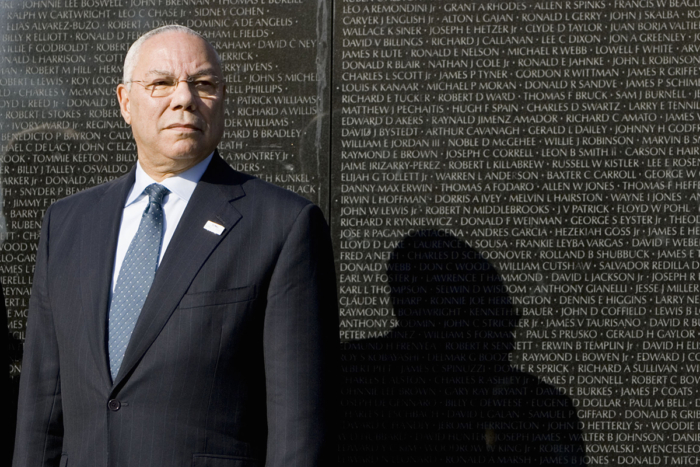
Former U.S. Secretary of State Colin Powell stands at the Vietnam Memorial during Veteran’s Day ceremonies in Washington in 2007. Photo: Reuters
[Episcopal News Service] Washington National Cathedral on Nov. 5 will host the funeral of Colin Powell, the former U.S. general and secretary of state, who was a lifelong Episcopalian. Powell, 84, died Oct. 18 of complications from COVID-19.
The funeral will be held at noon. It will not be open to the public, but numerous military and congressional leaders are expected to attend, the cathedral said in a news release.
“Beyond his military and diplomatic success, Secretary Powell became a universally respected north star on the nation’s moral compass,” said the Very Rev. Randy Hollerith, the cathedral’s dean. “We pray that America will find the courage and capacity to be the nation that Secretary Powell believed us to be.”
Powell joined the U.S. Army after graduating from college in 1958 and served two tours in Vietnam during the 1960s. He later served in the administrations of several Republican presidents, including President Ronald Reagan, who appointed him national security adviser in 1987. He was the first African American in that role, and in 1989, he became the first Black chairman of the Joint Chiefs of Staff, under President George H.W. Bush. When Bush’s son George W. Bush became president in 2001, he picked Powell as his secretary of state, another first for an African American.
Presiding Bishop Michael Curry issued a written statement after Powell’s death in which he recalled meeting with Powell over breakfast a few years ago. “I give thanks for his model of integrity, faithful service to our nation and his witness to the impact of a quiet, dignified faith in public life.”
Powell, the son of Jamaican immigrants, grew up in New York’s South Bronx neighborhood, where his family attended St. Margaret’s Episcopal Church. He served as an acolyte, and his father was senior warden.
“I’ll never forget when I was confirmed, the bishop laying his hands on my head and intoning, ‘Defend, O Lord, this thy child with thy heavenly grace, that he may continue thine forever,’” Powell wrote in 1991 for Guideposts magazine. “Those words gave me a deep assurance, and every year thereafter when I heard this supplication, that feeling of God watching over me was reaffirmed. Along with it was a sense of needing to live up to his expectations.”
We remember the saints who have gone before
We would like the congregation’s help to update the list of our departed loved ones, whom we will honor in next Sunday’s All Saints service. Please reach out to Althea, Violet, or any vestry member with any additions or corrections.
The following is the list from our 2020 service.
Celeste Anderson
Art Atkins
Doris Atkins
Mildred Austin
Zuma Austin
Harry L. Bailey
Lois Bailey
Joe Bailey
Edna Banks
Leslie Banks
Sammie Banks
Norma Barnes
Rev. Alfred Barber
Rev. Leroy Barber
Louise Bartholomew
Susan Beck
Hattie Blanton
Cecilia Bloomfield
Elizabeth Boone
William Boone
Eva Baxter
Maybell Beal
Rev. Patricia Bennett
Betty Benson
Doris Biot
Bishop Frederick Borsch
John Bradshaw
George Branton
Mina Brown
Dietra Burton
Janet Caldwell
Loretta Calloway
Grace Cargill
Louise Cargill
Doris Carter
Eric Carter
Raymond Clark
Zenobia Clark
Cecil Clayton
Iris Clayton
Arthur Cleaver Sr.
Arthur Cleaver Jr.
Ava Cleaver
Celestine Cleaver
Emanual Cleaver
Lowell Cleaver
Maude Cleaver
Thomas Cleaver
Audra Cobb
Bobbye Coleman
Anita Conerly
Hattie Conerly
Leander Conerly
Leon Conerly
Lerna Conerly
Jack Cosey
Joyce Cox
Bernice Cummings
Erline Cummings
Sidney Cummings
Alberta Curtis
Claud Curtis
Bobbie Davis
James Davis
Earl Dickerson
Kathryn Dickerson
Anthony Dibrell
Valorie Dibrell
Hardina Diggs
Kenneth Draver
Nan Draver
Leonice Dubin
Bill Duncan
Flossie Duncan
Louise Edwards
Kathryn Fleming
Eddie Foster
Marie Foster
Annie Fulbright
Janice Fulbright
Marshall Fulbright Jr
James W. Glosson
Martina Lyles Glosson
Ann Goldingay
Ethel Green
Leolla Griffin
Richard Hartley
James Hash
Julia Hash
Judy Hash
Cornell Hatchett
Lena Belle Hicks
Lois Hicks
Christopher Hodgson
Esmeralda Hodgson
Rose Dunne Holland
Robin Holland
Rev. Richard Horton
Gloria Mims Huffman
Heather Fulton
Carrie Hunter
Delroy Hunter
Arnita Jackson
Austin Jacques
Flossie Jacques
Bessie Johnson
Decker Johnson
George Jones
Charles Jones
Ina Jones
Melba Jones
Shirley Jones
Margaret Joseph
Lottie Keith
Laura Kennedy
Lea Leroy
Doris Mackinnon
Joyce MacMurray
Alyce McClelland
Isaac McClelland
Carolyn McCullough
Marva Mcrae
Claude McDaniel Jr.
Charlotte McShann
Delores Miller
Claude Mims
Deloris Mims
Don L. Mims
Gloria Mims
Kim Laura Mims
Leroy Mims Sr.
Leroy Mims Jr.
Lillian C. Mims
Joseph Mims Sr.
Joseph Mims Jr
Julian Mims
Patsy Mims
Rosebud Mims
Lorraine Mitchell
Carolyn Moore
James Moore
Jack Moore
Lora Jacques Moore
Margerie Moore
Rev. Jesse Moses
Jane Strong Moses
Elizabeth Mounday
Seward Mounday
Faye Nichols
Elizabeth Nicholson
Frank Nicholson
Lucita Nicholson
Stanford Nicholson
Rev. Alfred Norman
Eddie Norman
Lorraine Norman
Rev. Ivor Ottley
Amanda Patterson
Evelyn Peak
Carl Perry
Selena Pendelton
Mozella Perry
Alfonso Pierre
Edna Pierre
Donny Powell
Hamlet Radcliff
Violet Ratliff
Carrietta Reynolds
Terry Reynolds
May Richardson
Morton Richardson
Cecil Rose
Miriam Salmon
Maurice Salmon
John Sandoz
Cordelia Scott
Florence Scott
Susie Sheridan
Robert Shotwell
Eddie Mae Shotwell
Mildred Singleton
Abraham Smalling
Cecilio Smalling
Ivy Smalling
Geneva Spriggs
John Steven
Edward Strong
Maudine Sykes
Howard Teer
Kathryn Teer
A.R. Traylor
Carol Traylor
Cynthia Traylor
Mary Traylor
Hallie Vollinck
Dorothy Wallace
Alfred White
Roy E. Wiggins
Rev. Alfred Wilkins
Lydia Wilkins
Artis Williams
Carrie E Williams
Eliza Williams
Ella Jewell Williams
Harlaviour Williams
Jonathan Williams Sr
Linda Norman Williams
Silvester Williams
Willie Williams
Winifred Williams
Aldine Young
New Bible Study for Dementia Caregivers and Their Churches

Morgan James’ new release, Finding Sanctuary in the Midst of Alzheimer’s: A Spiritual Guide for Families Facing Dementia, by Dr. Elizabeth Shulman, offers spiritual support for those caring for someone with dementia.
There are over sixteen million people caring for someone with dementia. Caregivers often endure stress and may struggle to find meaning in their role as a caregiver. This book addresses common challenges caregivers face using scripture and personal narratives. Done in a Bible study format with separate sections for spouses, adult children caring for a parent and those who want to provide support to a caregiver but don’t know how, Finding Sanctuary in the Midst of Alzheimer’s equips churches, senior living facilities and support groups with the tools to find hope and thrive as caregivers.
Caring for individuals with dementia requires patience, trust, and a willingness to meet their needs. Engaging with relevant scripture and listening to caregivers’ personal stories will empower participants in their caregiving journey, while offering respite and a sense of sanctuary from their caregiving challenges.
If you would like more information about this topic, or to schedule an interview with Dr. Shulman, please contact the author at mail@elizabethshulman.com or 440-840-8375.
About the Author:
Elizabeth Shulman, D.Min., STNA has over 30 years of experience in both parish and healthcare ministry. Her devotions for caregivers have appeared in Guideposts’ Strength and Grace, and she frequently speaks to churches, retirement communities, and other community groups on dementia and caregiving. A spousal caregiver for 8 years, she trains congregations and other community groups to be more comfortable and confident in serving families impacted by dementia. Elizabeth’s presentations, Mary and Martha Caregiving and A New Pair of Glasses, inform audience members on the challenges of caregiving and offers hope to caregivers by providing new ways to reframe their experience. She and her husband, Leo, share 7 wonderful daughters and live near Cleveland, Ohio. To find out more, please visit her website: www.elizabethshulman.com.
More About This Title:
Finding Sanctuary in the Midst of Alzheimer’s: A Spiritual Guide for Families Facing Dementia, by Elizabeth Shulman, will be released by Morgan James Publishing on September 21, 2021. Finding Sanctuary — 978-1631954634 — has 156 pages and is being sold as a trade paperback for $12.99.
About Morgan James Publishing:
Morgan James publishes trade quality titles designed to educate, encourage, inspire, or entertain readers with current, consistent, relevant topics that are available everywhere books are sold.
Presiding Bishop Michael Curry on the passing of Gen. Colin Powell
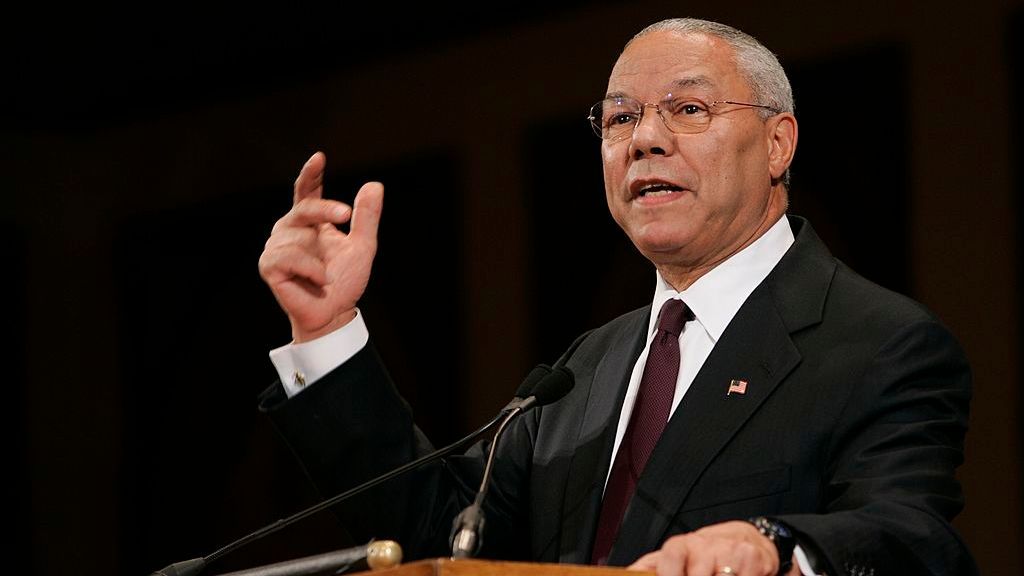
My heart is heavy today with the news of the death of Colin Powell, former secretary of state, four-star general, and lifelong Episcopalian. I pray for his family and all his many loved ones, and I give thanks for his model of integrity, faithful service to our nation, and his witness to the impact of a quiet, dignified faith in public life.
Powell also dedicated himself to service in his retirement. I recall fondly having breakfast with him a couple years ago. He became energized and passionate about his work with the Colin Powell School for Civic and Global Leadership, which is part of his alma mater, The City College of New York.
He cared about people deeply. He served his country and humanity nobly. He loved his family and his God unswervingly. As Jesus says in the New Testament, “Well done, good and faithful servant.”
May he rest in peace and rise in glory.
The Most Rev. Michael Bruce Curry
Presiding Bishop and Primate
The Episcopal Church
Declaración del obispo presidente Michael Curry en ocasión del fallecimiento del general Colin Powell, exsecretario de Estado
Hoy mi corazón está apesadumbrado con la noticia de la muerte de Colin Powell, exsecretario de Estado, general de cuatro estrellas y episcopal de toda la vida. Elevo mis oraciones por su familia y todos sus seres queridos, y doy gracias porque fue modelo de integridad, porque dio fiel servicio a nuestra nación y porque su vida fue testimonio del impacto que puede tener en la vida pública, una persona de fe calma y digna.
Powell siguió trabajando al servicio de otros incluso después de su jubilación. Recuerdo con cariño haber desayunado con él hace un par de años. Él sentía una gran energía y entusiasmo por su trabajo con la Escuela Colin Powell de Liderazgo Cívico y Global, que es parte de su alma mater, The City College of New York.
Se preocupaba profundamente por los demás. Sirvió a su país y a la humanidad con nobleza. Amaba a su familia y a su Dios con fe inquebrantable. Tal y como dijo Jesús en el Nuevo Testamento: “Bien, siervo bueno y fiel”.
Que descanse en paz y se eleve en gloria.
El Reverendísimo Michael Bruce Curry
Obispo Presidente y Primado
La Iglesia Episcopal
Methodist racial history recalled on 250th anniversary of Asbury’s US arrival
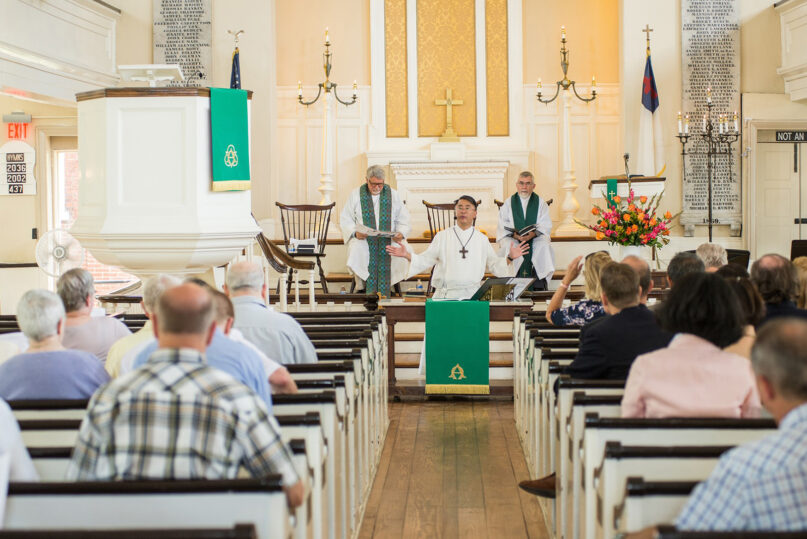
The Rev. Mark Salvacion, center, speaks during a service at Historic St. George’s United Methodist Church in Philadelphia. Photo by David Fonda, courtesy of HSG
[Religion News Service] Two and a half centuries ago, Francis Asbury arrived in the United States from Great Britain, bringing with him what would become the Methodist faith. He went on to spread it across the country, with St. George’s Church in Philadelphia as his home base.
St. George’s will mark the occasion of Asbury’s arrival with a weekend of events at the end of October. But the historic church, which remains the oldest continually used Methodist building in the United States, is also the starting point of three African American churches and one denomination after a “walkout” by Black worshippers.
Over time, recounts the Rev. Mark Salvacion, St. George’s current pastor, African Americans —some recently freed from slavery — were segregated to the sides of the church, to the back of the building and to a balcony, preventing them from receiving Communion on the church’s main floor.
Salvacion describes this and other parts of St. George’s history in the church’s “Time Traveler” program for teen confirmation students learning about their faith and in classes of middle-age adults training to become certified lay ministers.
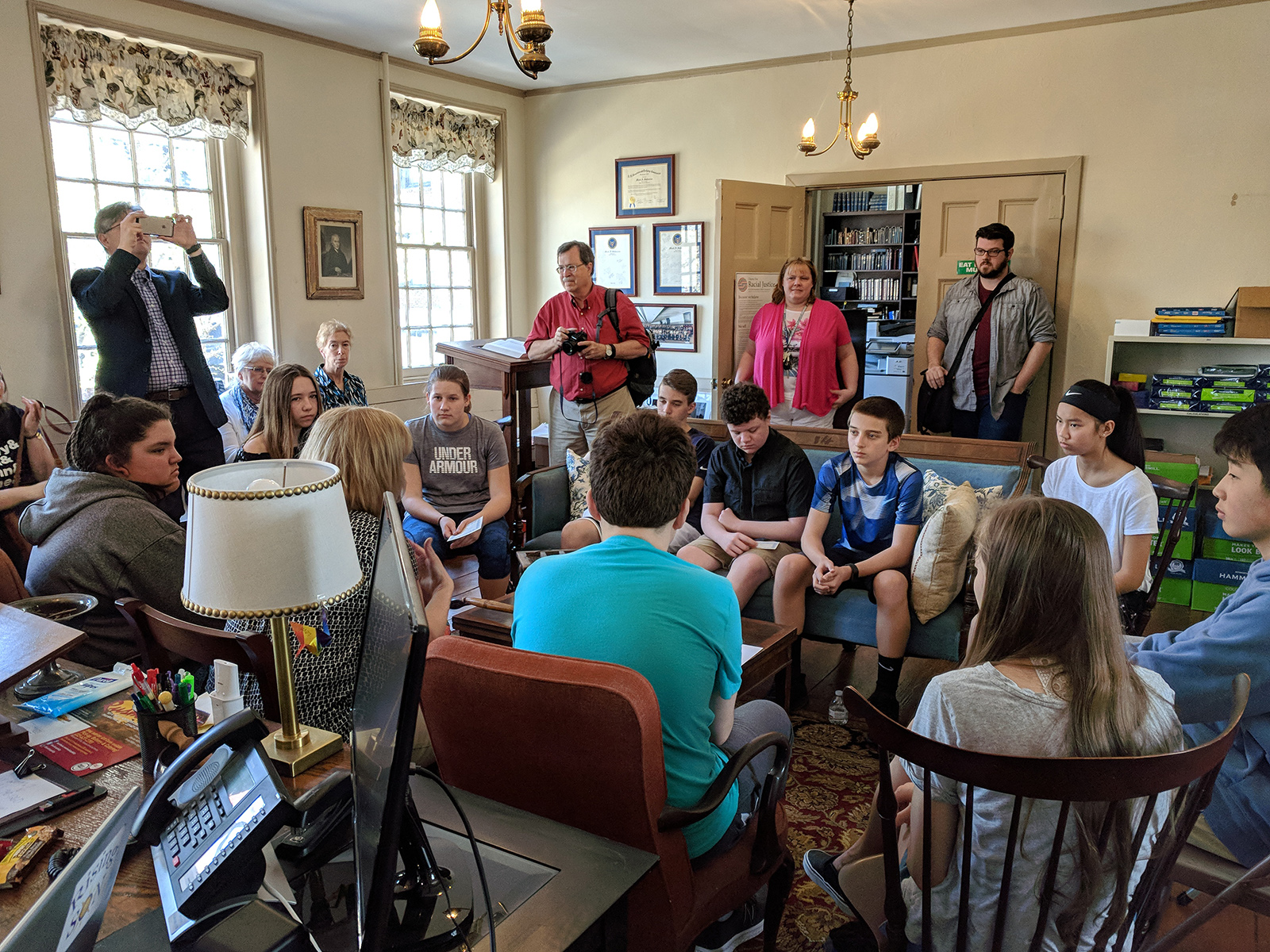
Teenage confirmation students attend a “Time Traveler” program at Historic St. George’s United Methodist Church in Philadelphia in 2018. Photo courtesy of HSG
“It’s not just telling happy stories about Francis Asbury itinerating to West Virginia,” said Salvacion, pastor of what is now called Historic St. George’s United Methodist Church. “It’s uncomfortable stories about race and the meaning of race in the United Methodist Church.”
The turning point for many African American worshippers, already dissatisfied with mistreatment, was a Sunday morning in the late 1700s. Lay preacher Richard Allen saw another Black church leader, Absalom Jones, forcibly pulled up while praying on his knees at St. George’s.
That led Allen and some of the other Black attendees to leave what was then known as St. George’s Methodist Episcopal Church and strike out on their own — in different ways.
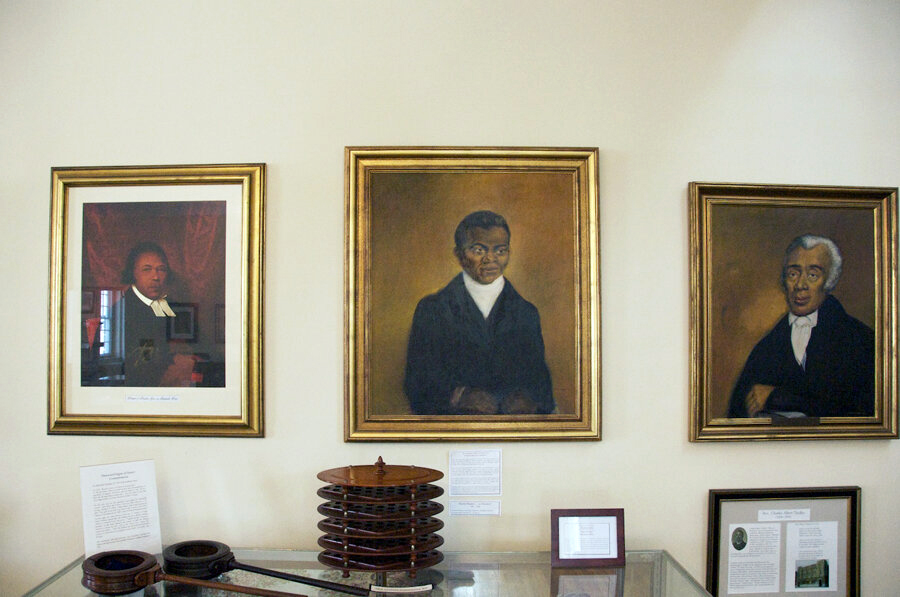
Portraits of Absalom Jones, from left, Harry Hosier and Richard Allen in Historic St. George’s United Methodist Church museum in Philadelphia. Photo courtesy of HSG
“This raised a great excitement and inquiry among the citizens, in so much that I believe they were ashamed of their conduct,” wrote Richard Allen in his autobiography. “But my dear Lord was with us, and we were filled with fresh vigour to get a house erected to worship God in.”
In 1791, Allen, who had been a popular preacher at St George’s 5 a.m. service, started what is now Mother Bethel African Methodist Episcopal Church. Asbury dedicated its first building, a former blacksmith shop, in 1794.
“Here’s Asbury and he comes in and he still has this kind of relationship with Richard Allen that is more than just collegial,” the Rev. Mark Tyler, current pastor of Mother Bethel, said of the men who were the first bishops of the Methodist and AME churches, respectively.
“I mean, you go out of your way as the representative and the saint of Methodism in America and you dedicate Mother Bethel. That is a statement that you’re behind this and endorsing it.”
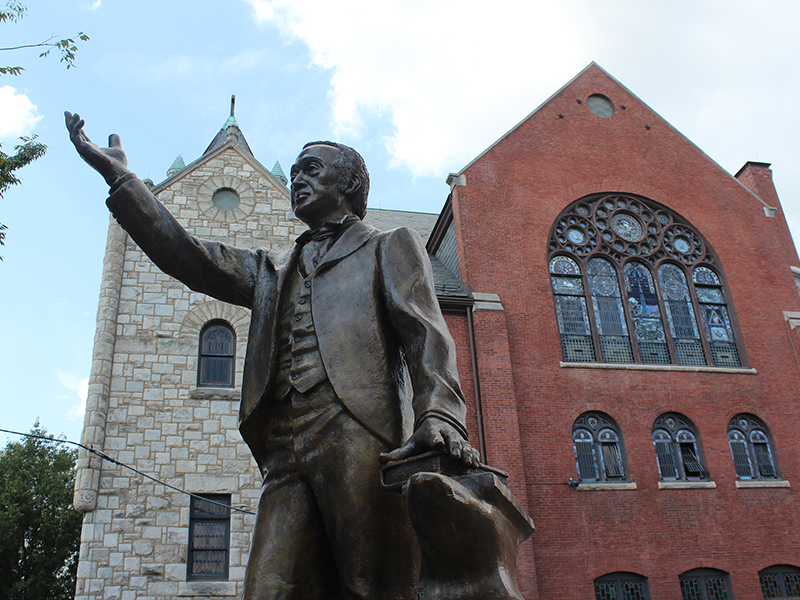
Bronze statue of Richard Allen, founder of the African Methodist Episcopal Church, on the property of Mother Bethel AME Church in Philadelphia on July 6, 2016. RNS photo by Adelle M. Banks
In 1816, after winning a court battle for its independence from the Methodist Episcopal Church, Allen started the African Methodist Episcopal Church, the nation’s first Black denomination.
Jones went on to serve as a lay leader of the African Church that began in 1792. Two years later, the congregation became affiliated with The Episcopal Church and was renamed the African Episcopal Church of St. Thomas. Jones was ordained a deacon in 1795 and a priest in 1802.
Arthur Sudler, director of the Historical Society & Archives at the 1,000-member church, said the 250th anniversary of Asbury’s U.S. arrival is significant not only for the three Philadelphia congregations that began after discord with St. George’s but also for the city and the three denominations they now represent.
“It’s an epochal moment simply because Francis Asbury’s role in helping develop Methodism in America, in part through his participation there at St. George’s, is one of those factors that gave birth to the Black Christian experience in Philadelphia,” he said. “And in America more broadly, because of the seminal role of Absalom Jones, Richard Allen, and Harry Hosier and their connections between what became these three denominations, the AME Church, the United Methodist Church and the Episcopal Church.”
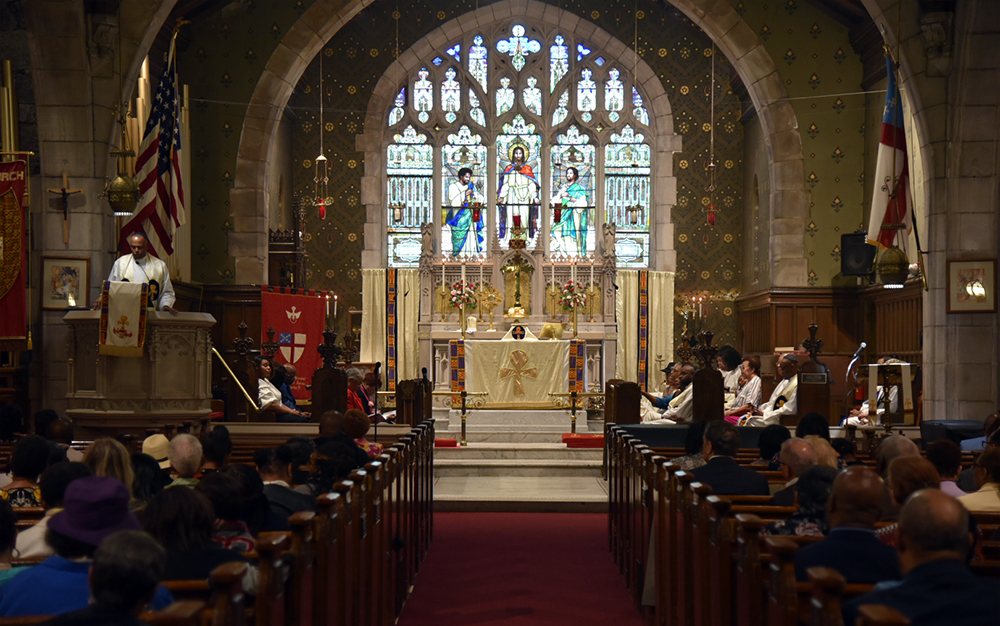
Service at the African Episcopal Church of St. Thomas in 2019. Photo by Dale Williams for D’Zighner Studios
Hosier initially stayed at St. George’s with other Black attenders who did not leave with Jones and Allen. He also was a closer colleague to Asbury than the other two men, having been a traveling companion who preached with the Methodist leader across the South. Allen, a free man, had declined the offer, avoiding a risky return to the region of the country where slavery remained legal.
Hosier helped found another Philadelphia Methodist congregation, which initially met in people’s homes and eventually became known as Mother African Zoar United Methodist Church. Asbury dedicated its building in 1796 and preached there a number of times, according to the United Methodist Church’s General Commission on Archives and History.
After it celebrated its 225th anniversary, Mother Zoar retained its name but merged with New Vision United Methodist Church in north Philadelphia, with a current average of 75 people at in-person worship services. It thus remains the oldest Black congregation in the United Methodist tradition in continuous existence.
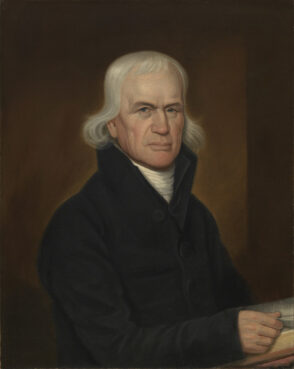
Portrait of Francis Asbury in 1813 by John Paradise. Image courtesy of National Portrait Gallery/Creative Commons
Given the steps of Allen and Jones, why did Hosier and other Black worshippers who once prayed at St. George’s remain within the Methodist Church?
“That is a million-dollar question,” said the Rev. William Brawner, the part-time pastor of Mother Zoar.
He said he assumes “those who left with Absalom, those who left with Richard were tired and figured that they could not change the system of injustice from the inside.” The founders of Zoar chose a different approach, hoping that remaining Methodist would help “change the hearts and minds of the people that were literally oppressing them.”
All these years later, Brawner said he does not judge the different decisions made by African American worshippers at St. George’s, who were unable to freely use spiritual practices that were different from those of white congregants and reflected beliefs some had brought with them from Africa.
“I think people left because of feeling uncomfortable and unaccepted in one place,” he said. “So the split could be celebrated now because of what has become of the split, but people didn’t split out of privilege. People split out of pain. They split because they were hurting.”
The emotions arising from the divisions transcended the centuries.
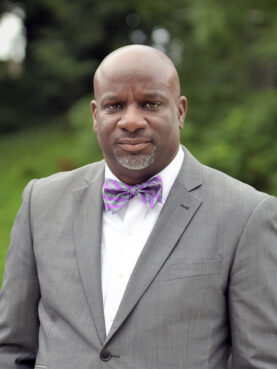
The Rev. Mark Tyler. Courtesy photo
Tyler, whose church has more than 700 members today, recalled the 2009 service when congregants of Mother Bethel worshipped at St. George’s for what was believed to be the first joint Sunday morning service since the 1700s. As the preacher for that day, he said the gathering was a “cathartic moment,” prompting many of his church’s members to weep.
Salvacion and the clergy of the other churches say occasional joint gatherings have continued since then, such as some of the congregations sharing Easter sunrise services and the annual Episcopal Church observance honoring Absalom Jones.
St. George’s currently has about 15-20 worshippers and a membership of about 50. It expects dozens of United Methodists and invited guests from other churches to attend the Oct. 30-31 commemoration.
Its pastor also expects exchanges and shared events will continue in the future among the congregations whose first members left his church building.
“We all view this history as being common history that we share,” said Salvacion, an Asian man who is one of St. George’s first pastors of color.
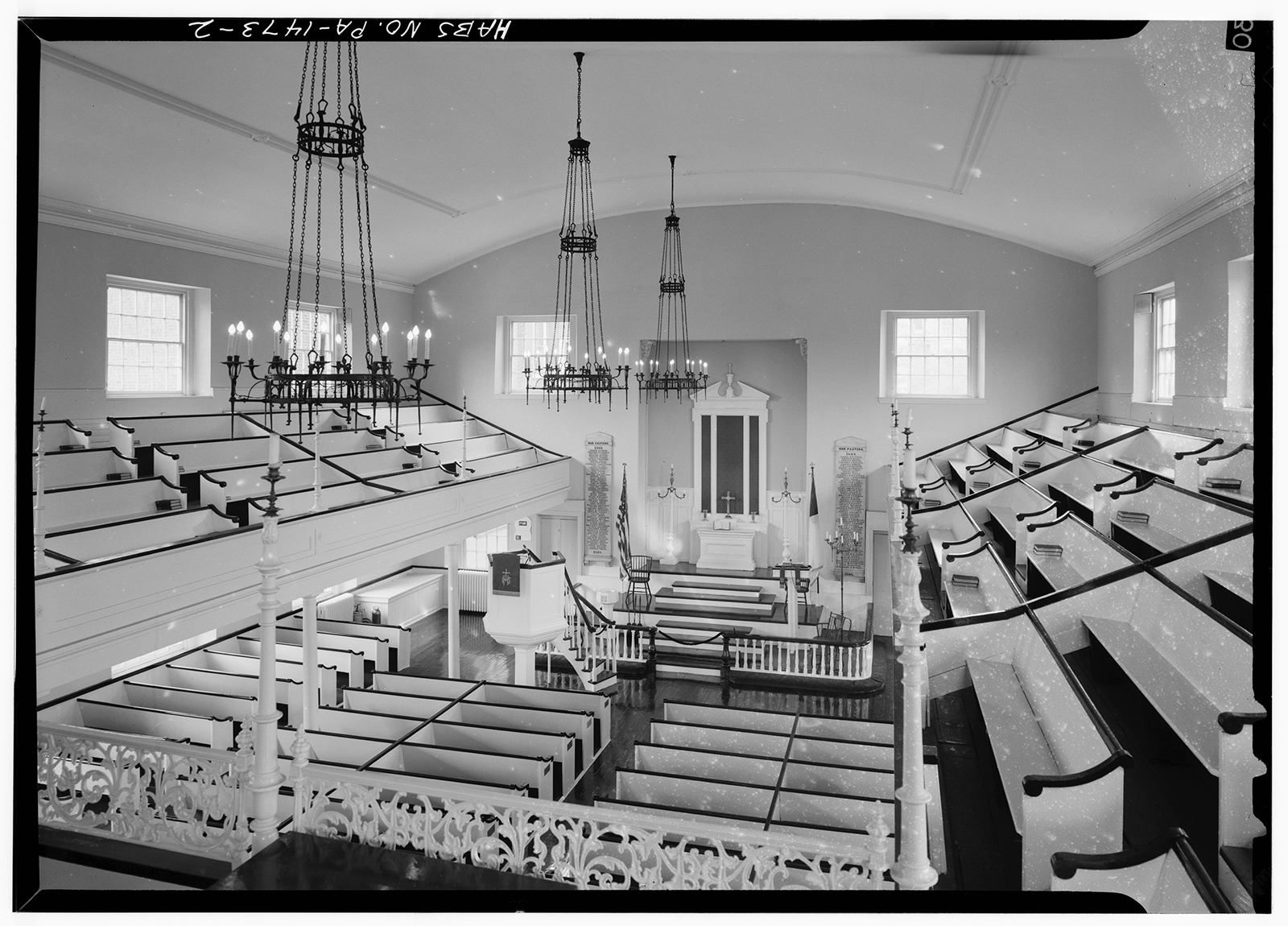
Interior of Historic St. George’s United Methodist Church in Philadelphia. Photo courtesy of LOC/Creative Commons
Tyler said the ongoing connections between St. George’s and Mother Bethel probably weren’t envisioned by anyone two centuries ago.
“The current relationship of these two congregations is, in some ways, a sign of hope for what’s possible,” he said. “If it can happen in these two congregations maybe it’s possible for us as a country and as a world. I have to take it for what it is — just a small sign of hope, in spite of all the kind of guarded optimism that I have.”
Seeking Volunteers at St. Barnabas
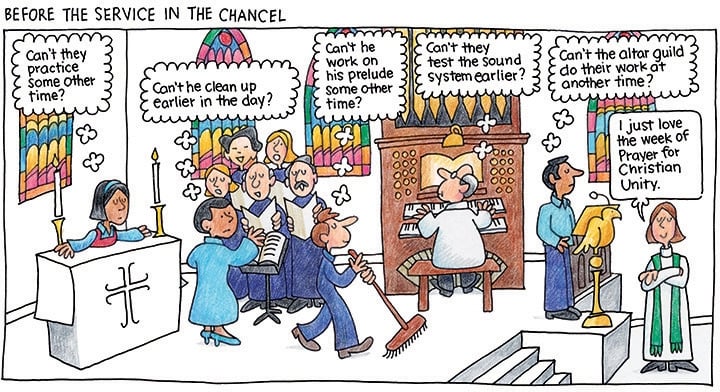
We have many opportunities for parishioners to help!
- Altar Guild – prepare and decorate the church for services
- Acolytes – serve at the altar during worship
- Greeters – greet visitors and hand out bulletins. Collect bulletins and tidy pews afteer service. Usher during Offertory and Communion
- Music – Sing with the St. Barnabas Chorus during Sunday Services. Join us for upcoming holiday singing and caroling.
- Sound Tech – run the tech and live feeds to Zoom and Facebook during Service
- Grounds – help Althea and Violet keep up the church grounds. Volunteer on work days
- Bulletins – prepare the bulletin for Sunday
- Website – weekly updates to the web site – including linking the bulletin and service music (choir practice) for upcoming Sundays
- Newsletters – add posts to the website for important church-related news, events, and announcements. Prepare and send the email newsletter
- Vestry – Serve a term on our Vestry – elections are coming soon.
Reach out to a vestry member if you’d like to help!
Afro-Latinos Founded the City of Los Angeles

Los Angeles, California has a lot more Black history than most people realize. The city was founded in 1781 by a group of 44 Mexican settlers, and 26 of them were of African descent. Pío de Jesús Pico, who was of both African and American descent, was one of the first governors of the area that is now known as the city of Los Angeles. In fact, he served as the governor of Alta California twice and was even a councilman before his untimely death.
Even more, in 1872, the First African Methodist Episcopal Church was established in Los Angeles when emancipated Blacks began moving to the city in significant numbers towards the end of the Civil War. In 1885, the second Baptist Church for African Americans was built.
In the 1920’s, Paul Revere Williams, a famous Black architect credited for shaping Los Angeles, began designing homes and commercial buildings through out the cities.
Locations like Central Avenue became the focal point for African-American communities. In fact, Central Avenue was the location of the vibrant Los Angeles jazz scene that attracted such greats as Louis Armstrong, Duke Ellington, Count Basie, and Bessie Smith. To date, the Dr. Ralph J. Bunche home, the first person of color to win the lauded Nobel Peace Prize, remains a landmark on Central Avenue.
The infamous Dunbar Hotel (originally known as the Hotel Somerville) on Central Avenue was completely financed and built solely by Black people. Known as one of the finest Black-owned hotels in the nation, it would often host major events such as the NAACP national conventions.
Today, Los Angeles remains one of the top cities in the countries where African Americans live, and Black history continues to be made in the areas of business, entertainment, politics, and more.